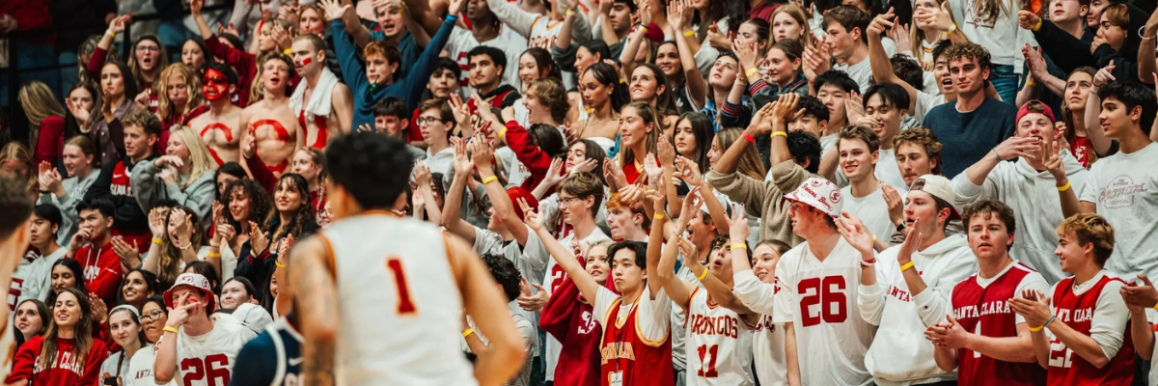
A team from Santa Clara just reached the NCAA Division I Men's Basketball Tournament for the first time in 30 years, competing in a world where rival programs spend tens of millions on their rosters. Understanding how that happened requires understanding NIL and the business system it created.
On Sunday, March 15, 2026, when the bracket for the NCAA Tournament–often called “March Madness”– was revealed, Santa Clara University heard its name called for the first time since 1996. The moment marked something unusual in modern college basketball: a program without a massive NIL collective, a nine-figure athletics budget, or the financial infrastructure of powerhouses like Kentucky or Duke had built a 26-win team and earned a place on the sport’s biggest stage.
That story is worth understanding. Because in today's college athletics landscape, making the NCAA Tournament as a mid-major program is not just a basketball achievement. It is a business achievement. And to understand why, you need to understand three letters that have reshaped how college sports work from the inside out: NIL.
NIL (Name, Image, and Likeness) refers to a college athlete's right to earn money from their personal brand through endorsements, social media deals, appearances, merchandise, and more.
Since the NCAA changed its rules in 2021, NIL has transformed from a legal technicality into a multi-billion-dollar system that influences which players go where, which programs win, and what careers now exist on the business side of college sports.
If you've watched any college basketball coverage recently, you've heard about it. But most of what gets discussed stays on the surface: which player signed the biggest deal, which school has the richest collective, which recruits chose a program because of the money. The business mechanics underneath that story are less often explained, but just as interesting.
The System That Existed Before
For most of the 20th century, the NCAA (National Collegiate Athletic Association) operated on a principle called amateurism. The idea was that college athletes were students first, competing for the love of their sport, and that any form of payment would corrupt the amateur ideal.
Under this framework, schools could offer athletic scholarships, which covered tuition, room, board, and some expenses. But athletes could not sign endorsement deals, take payment for appearances, or profit in any way from their name or fame.
The problem was that the "amateur" framing had become increasingly difficult to defend. College football and basketball had grown into a multi-billion-dollar industry, generating enormous revenue for universities, conferences, television networks, and the NCAA itself. The athletes at the center of that machine received scholarships, while everyone around them was paid.
Legal challenges have accumulated over the years. The most significant came in the form of the House v. NCAA antitrust case, which ultimately led to a landmark settlement in 2025 authorizing Division I schools to share revenue directly with athletes, up to $20.5 million per school. NIL, which had already been permitted since 2021 through third-party deals, became part of a broader new financial structure for college athletics.
How NIL Actually Works

When people say a player "has an NIL deal," they typically mean one of a few things. The simplest is a direct brand deal, which means a company pays an athlete to appear in an advertisement, post sponsored content on social media, or attend a promotional event. The athlete uses their name, image, and likeness to promote the brand, and gets paid for it.
A more complex and increasingly important version involves NIL collectives. These are organizations, often funded by boosters and alumni, that pool money to create NIL opportunities for athletes at a specific school.
A collective might pay a roster of players to make appearances, produce content, or participate in community events, effectively functioning as a financial support structure for the program's recruiting and retention efforts.
Since the House settlement, a third layer has been added: direct school payments. Under the new revenue-sharing framework, universities can now pay athletes directly from their own budgets, up to the annual cap. This is the closest college sports have ever come to formally paying players.
What this means in practice is that programs with wealthy donor bases, large alumni networks, and aggressive collectives can now spend dramatically more on their rosters than programs without those resources. Kentucky reportedly invested approximately $22 million in its basketball roster this season. Programs like Santa Clara operate on a fraction of that.
The Mid-Major Problem: And Why Santa Clara's Run Matters
Here is where the Bronco’s story becomes instructive as a business case.
For decades, one of the defining charms of the Big Dance was the Cinderella run, where a lower seed knocks off a power-conference giant, and the mid-major program nobody had heard of suddenly finds itself in the Elite Eight. Think Georgetown, UNLV, Butler, George Mason, and even the WCC’s own Gonzaga.
Those runs happened because the talent gap between well-funded programs and smaller schools was manageable if a mid-major coach built the right culture, developed players well, and kept a core group together.
NIL and the transfer portal have significantly complicated that formula. When a player from a mid-major program breaks out and attracts attention, bigger programs with larger NIL collectives can now offer that player a compelling financial reason to transfer. The very development work that made a player valuable becomes a liability for the smaller school that did it.
Santa Clara's 26-win season took place in that environment. Head coach Herb Sendek built a program around player development, team cohesion, and a culture that kept his core players committed.
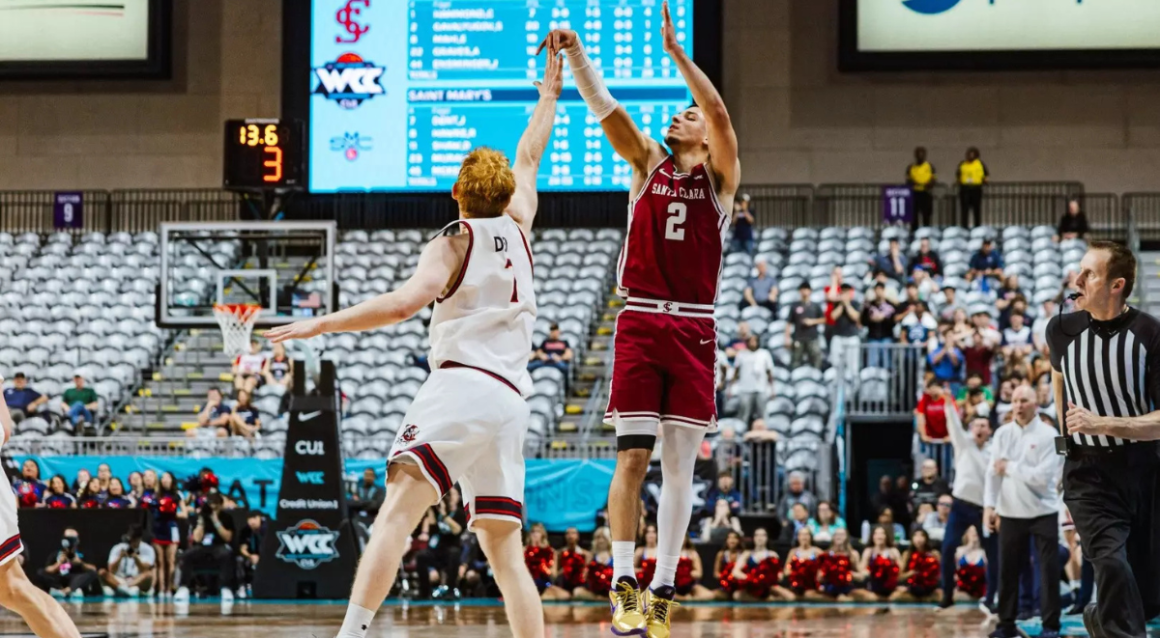
Guard Sash Gavalyugov, whose game-winning three-pointer against Saint Mary's in the WCC semifinals essentially punched the Broncos' tournament ticket, arrived from Bulgaria as a freshman and developed into a clutch contributor. That is the old model, and it still works, but it requires something that money cannot directly buy.
From a purely business-strategy perspective, Santa Clara's approach is something of a cost-efficiency play. The program competed for a tournament berth at a fraction of the cost of blue-blood programs by optimizing on dimensions that money does not directly control, such as coaching quality, player relationships, and team chemistry. Whether that model remains viable as NIL spending escalates is the question that college sports administrators and sports business scholars are actively trying to answer.
The New Business Architecture of College Sports
Understanding NIL requires understanding the broader financial architecture in which it exists, because NIL is not a standalone policy. It sits within a system that now includes direct revenue sharing, transfer-portal dynamics, conference realignment, and an increasingly professionalized relationship among athletes, universities, and the commercial entities that surround college sports.
The numbers give a sense of the scale. The NIL economy across all college sports is estimated at approximately $2.7 billion in 2026, with around $1.9 billion flowing directly to athletes through a combination of school payments, collective deals, and brand arrangements.
The NCAA Tournament alone generates over $1 billion annually in television and marketing revenue. The economics of college basketball are not amateur. They never really were, but the financial relationships are now more explicit, and the business decisions more consequential.
This has created new kinds of jobs and new requirements for expertise. Someone has to structure NIL deals. Someone has to manage collective operations. Someone has to advise athletes on tax implications and contract terms. Someone has to help athletic departments navigate the compliance requirements of the new College Sports Commission, which now oversees enforcement of the revenue-sharing rules. Someone has to develop the fan-engagement technology and ticketing strategy that generates revenue programs, then use those programs to fund their NIL commitments.
Five years ago, most of those roles did not exist in the form they do today. They are now among the fastest-growing career categories in sports business.
What This Creates for Careers
The business transformation of college athletics has produced a clear talent demand signal, and business schools are better positioned to respond to it than traditional sports management programs.
NIL compliance and deal structuring require people who understand contracts, financial arrangements, and regulatory frameworks. Collective management requires people who can raise and deploy funds, manage relationships with athletes and donors, and navigate an evolving legal landscape.
Revenue analytics for athletic departments requires people who can build financial models, interpret data, and translate findings into decisions. Fan engagement and digital marketing increasingly require people who understand personalization technology, CRM systems, and content strategy at scale.
These are business skills applied to a sports context. The domain knowledge matters. You need to understand how college sports work, what the House settlement actually changed, how the transfer portal functions, and why a particular conference deal affects a program's budget. But the underlying competencies are those of a well-trained business professional.
The Bay Area context adds a dimension that matters. The region is home to seven major professional sports franchises and generates approximately $7 billion in annual sports revenue. It is also the world's most concentrated hub of technology and business talent.
The intersection of those two realities creates career opportunities in sports analytics, sports technology, fan engagement, and revenue operations that simply do not exist at the same density anywhere else.
Why This Moment Matters
The NCAA men’s basketball tournament is the most concentrated version of everything that college sports have become. Sixty-eight teams. Billions in television revenue. NIL deals are activating in real time as players perform on a national stage. Coaches earn more than most university presidents. Players who are, in the language of the House settlement, no longer amateurs in any meaningful financial sense.
And somewhere in that bracket, a team from Santa Clara, California, built not on NIL spending but on development and culture, earned its place. That contrast is not incidental. It is the central business tension in college sports right now. What does winning actually require, and who can afford to do it?
Understanding NIL is not just useful background for following the tournament. It is the foundation for understanding how college sports operate as a business, where it is headed, and what kinds of expertise will be required to operate within it over the next decade.
Interested in building a career in sports business? The MS in Sports Business at the Leavey School of Business is the only program of its kind from an AACSB-accredited business school in Northern California, developed in partnership with the Giants, 49ers, Warriors, Sharks, and Nike.
Learn about the MS in Sports Business at scu.edu/business/ms/ms-sports-business
Discover Your Next Step
This will only take a moment.