
Key Takeaways
- An MBA (Master of Business Administration) is a postgraduate degree designed for professionals who want to expand their understanding of how organizations operate and prepare for leadership responsibilities.
- MBA programs come in several formats to fit different career stages and schedules, including full-time, part-time, or evening, online, and Executive MBA programs designed for experienced professionals.
- An MBA strengthens business knowledge across multiple functions, expands professional networks, and can support career advancement, leadership opportunities, and higher earning potential.
Few graduate degrees appear as frequently in business conversations as the MBA. The three letters appear in leadership biographies, on company executive teams, and throughout job descriptions across many industries. Employers reference the degree when discussing leadership positions, while professionals often view it as an important step in their long-term career development. Universities have also built dedicated business schools and graduate programs around MBA education.
Despite how often the term appears, many people still pause when they try to explain what the degree actually involves. What is an MBA, and what do MBA students study?
Answering these questions requires looking further into the degree, beyond the name itself. Understanding how MBA programs are structured and what students gain from the experience helps explain why the degree continues to play such a visible role in business education and professional development.
What Is an MBA Degree?
An MBA is a postgraduate degree in business administration. Unlike a bachelor's degree in business, which covers foundational concepts, an MBA is built for people who already have professional experience and want to develop into leaders.
Instead of focusing on isolated subjects, it examines how different parts of an organization interact, how financial decisions affect operations, how strategy influences marketing, and how leadership influences performance.
The goal is to strengthen your ability to evaluate complex situations, allocate resources, and guide teams through uncertainty. Most MBA programs also allow you to concentrate in a specific area, such as finance, marketing, entrepreneurship, or data analytics, depending on your professional direction.
How Does an MBA Program Work?
Most MBA programs run between one and three years, depending on the format you choose. The coursework is organized around terms or semesters, and you'll typically complete 48 to 60 credit hours to graduate.

In the classroom (or virtual session, if you pursue an online MBA), you'll work through case studies drawn from real companies, collaborate on group projects, and present your findings to peers and faculty. This isn't passive learning. MBA programs are designed to be active and applied as you're constantly working with the material, not just reading about it.
Assessment methods vary by course but typically include exams, written analyses, team presentations, and consulting-style projects. Many programs also include field work, where students partner with actual companies to solve business challenges.
What Do You Study in an MBA Program?
MBA programs are built around a core curriculum that covers the fundamentals every business leader needs, regardless of their industry or function. You can expect coursework in areas like:
- Financial Accounting
- Managerial Economics
- Financial Management
- Leading People and Organizations
- Business Analytics
- Quantitative Methods
- Analytical Decision Making
- Operations Management
- Ethics for Managers
- Effective Business Communications
Most MBA programs include elective courses and concentrations that allow you to explore a specific field in greater depth. While the core curriculum builds a broad understanding of how organizations operate, concentrations give you the opportunity to focus on the areas most relevant to your professional interests and career direction.
At Santa Clara University's Leavey School of Business, Evening and Online MBA students may complete a concentration by taking at least 12 units of advanced coursework within a specific subject area. These concentrations were developed in consultation with Silicon Valley employers and are designed to expand foundational business knowledge while exposing students to emerging technologies, evolving markets, as well as contemporary management practices.
Available MBA concentration options include:
- Finance
- Marketing
- Leading Innovative Organizations
- Data Science and Business Analytics
- Entrepreneurship and New Venture Creation
- Business Sustainability
Each pathway introduces specialized frameworks, analytical tools, and industry applications relevant to that field. For example, the Data Science and Business Analytics concentration focuses on quantitative decision-making. Students learn to work with data using tools such as Python, SQL, and Tableau while applying statistical and econometric models to business problems.

Other concentrations examine how organizations grow, compete, and lead in complex markets. The Entrepreneurship and New Venture Creation concentration studies how startups develop and scale, addressing topics such as venture capital, innovation strategy, and the operational challenges faced by new firms, particularly in technology sectors. Finance focuses on investment valuation, financial markets, and portfolio construction, while Marketing examines modern marketing frameworks and customer-focused strategy across both technology and traditional industries.
Leadership and long-term organizational direction are explored through the Leading Innovative Organizations concentration, which addresses organizational design, talent management, and strategic change. The Business Sustainability concentration examines how companies incorporate environmental, social, and governance considerations into strategy, using frameworks and metrics that guide long-term value creation.
By selecting a concentration, you can align your MBA experience with the type of roles you want to pursue, whether that involves financial analysis, product and brand strategy, organizational leadership, data-driven decision-making, or launching new ventures.
Types of MBA Programs
MBA programs are offered in several formats because candidates enter business school at different stages of their careers. Some professionals want a full academic immersion, while others need to balance study with work responsibilities. As a result, business schools tend to structure MBA programs in the following ways:
Full-Time MBA
A full-time MBA is the most immersive format. Students usually complete the degree over two academic years while dedicating most of their time to coursework, projects, networking, and recruiting. As is the standard, classes are held during the day, and the program includes a heavy schedule of group work and career activities. Because of this, many students step away from full-time employment while studying.
This format is often chosen by early-career professionals who want rapid career acceleration or by individuals planning a major industry shift. The structure allows students to fully engage with internships, consulting projects, and campus recruiting opportunities. These experiences can be particularly valuable for those transitioning into competitive industries such as consulting, finance, or technology.
Part-Time MBA
A part-time MBA is designed for professionals who want to continue working while earning their degree. Courses are typically scheduled in the evenings, and in some programs also on weekends, allowing students to progress academically without leaving their jobs. Because students take fewer courses at a time, the overall timeline may extend beyond the typical two-year structure of a full-time program.
This format works well for professionals who want to strengthen their management skills while continuing to advance in their current organization. Many students apply new concepts directly to their work, which often makes classroom discussions more grounded in practical experience.
Santa Clara University's Evening MBA follows this model. Classes meet twice a week in the evening on the Santa Clara campus, allowing professionals across Silicon Valley and the Bay Area to study while maintaining full-time roles.
Online MBA

An online MBA offers greater geographic and scheduling flexibility. Coursework is delivered digitally, but strong programs still maintain a structured learning environment through cohort models, live sessions, group projects, and faculty interaction. Rather than studying entirely independently, students progress through the curriculum alongside peers while participating in discussions and collaborative assignments.
Many online programs also incorporate short in-person residencies or immersion experiences to strengthen networking and applied learning. These sessions often focus on leadership development, team-based projects, or industry engagement.
Santa Clara University's Online MBA follows this blended approach. The program includes two on-campus residencies, allowing students to meet classmates and faculty while engaging in collaborative projects. Students can begin the program at four different points during the year and complete the degree in as little as two years, depending on pacing.
Executive MBA (EMBA)
An Executive MBA is designed for senior professionals who already hold significant leadership responsibility. Participants often have a decade or more of work experience and are managing teams, divisions, or strategic initiatives within their organizations. Because these professionals cannot step away from their roles, EMBA programs are structured around concentrated schedules that minimise disruption to work responsibilities.
The curriculum emphasises high-level decision-making, leadership in complex environments, and cross-functional strategy. Discussions often draw heavily on the professional experiences of the participants themselves, making the cohort an important part of the learning environment.
Santa Clara University's Executive MBA reflects this structure through an 18-month hybrid program that blends online coursework with in-person sessions. Classes are scheduled approximately once a month on campus and once a month virtually, typically on Friday afternoons and Saturdays. This format allows experienced leaders to apply new frameworks directly within their organizations while continuing to manage their professional responsibilities.
Admission Requirements for an MBA
Requirements vary by school and program, but most MBA programs look for a combination of the following:
- A bachelor's degree in any field. An undergraduate business degree is not required.
- Professional work experience. Many programs expect two to five years of experience, while Executive MBA programs often require ten years or more in professional or leadership roles.
- Standardised test scores. Many schools accept GMAT or GRE scores, although test-optional policies have become more common in recent years.
- Essays or personal statements that explain your career goals, professional motivation, and leadership potential.
- Letters of recommendation written by supervisors or other professional references who can speak about your work and leadership ability.
- An admissions interview. This stage is often reserved for applicants who advance beyond the initial application review.
The requirements at highly selective programs can be competitive, but admissions committees rarely focus on a single metric. Most schools aim to build a balanced cohort of professionals with diverse experience, perspectives, and career goals.
Benefits of Getting an MBA
The benefits of getting an MBA extend well beyond the credential itself. Graduates often describe the degree as a turning point that expands their business knowledge, strengthens professional networks, and opens opportunities for advancement across industries.
Stronger business skills across multiple functions
An MBA curriculum covers the core areas that drive organizational performance, including finance, marketing, operations, and strategy. This broad exposure helps you understand how different parts of a business connect and influence each other. As a result, you can communicate more effectively with specialists in different departments and make decisions with a clearer view of the organization as a whole, which strengthens both leadership and collaboration regardless of your primary field.
Higher earning potential and career advancement
Many professionals pursue an MBA to accelerate their careers. The degree often positions graduates for leadership roles, promotions, or transitions into new industries. Outcomes data from Santa Clara University's Online MBA program illustrate this impact. Based on self-reported data from recent graduating cohorts, 92% of Online MBA alumni reported receiving a salary increase within six months of graduation. While salary growth varies by industry and experience level, these results reflect the degree's ability to strengthen professional credibility and open new career paths.
A professional network that expands opportunities
One of the most frequently cited benefits of an MBA is the network students build during the program. MBA cohorts bring together professionals from different industries, companies, and functions. These connections often become long-term professional relationships that lead to mentorship, job opportunities, and collaborations later in a career.
At Santa Clara University, this network extends well beyond the classroom. Nydia MacGregor explains that the strength of the alumni community plays a central role in the MBA experience:
"SCU's network is all about really enhancing the ties in the Bronco family. We have over 15,000 MBA graduates in the Northern California area, and that's a network that any of our students can tap into at any time."
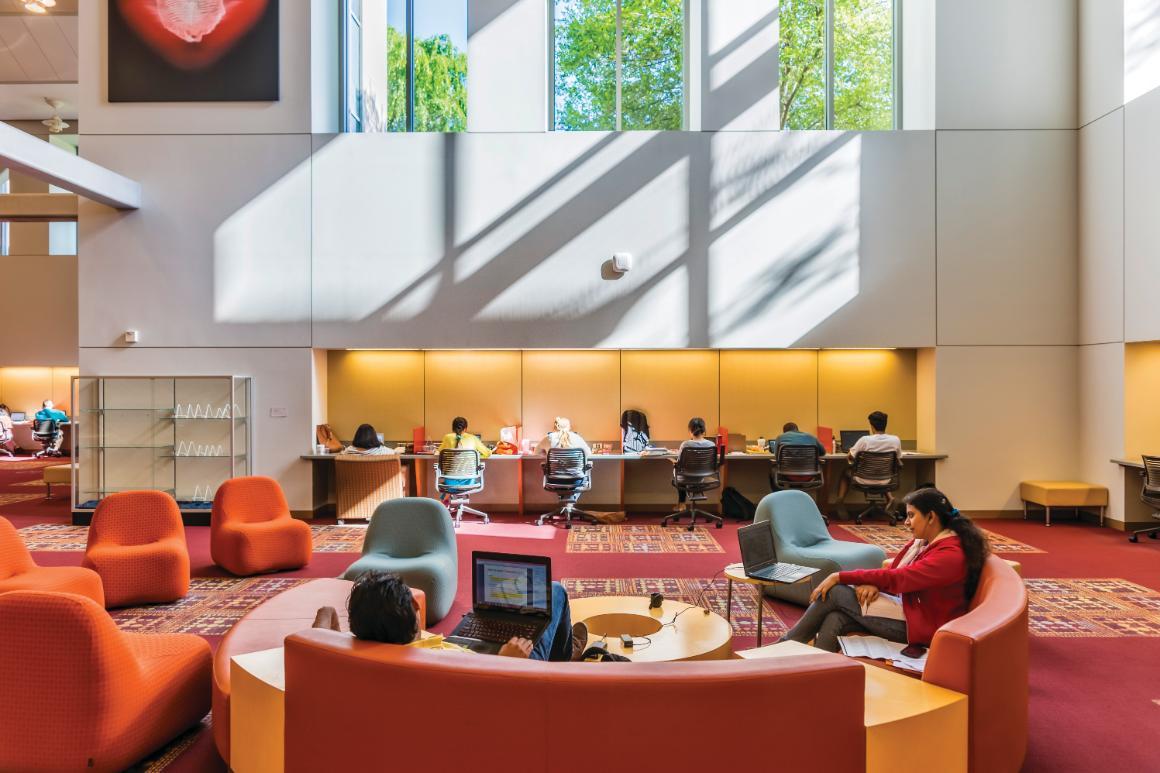
For many students, the university's location further amplifies the value of that network. Mehroze Khan describes how studying in Silicon Valley shaped his expectations for the program:
"The strong alumni network, the proximity, as far as location for me is concerned. I wanted to be in Silicon Valley post-MBA, so I thought this would be a great way to not only tap into the alumni network but also the location."
The combination of alumni connections and regional industry presence can create opportunities that extend well beyond graduation.
Leadership development through practical experience
MBA programs are structured around applied learning rather than purely theoretical study. Students regularly analyse business cases, lead group projects, and make strategic recommendations under real-world constraints. These exercises require participants to communicate ideas clearly, defend their reasoning, and work with people who bring different perspectives and professional backgrounds.
Through this process, students develop leadership habits that extend beyond technical expertise. Many graduates describe leaving the program with a clearer understanding of how they approach decisions, manage teams, and evaluate complex problems.
Credibility and long-term career mobility
An MBA from a well-established business school signals rigorous training and professional readiness. Accredited programs follow strict academic standards and maintain strong ties with industry, which helps ensure that the curriculum reflects current business practice. For graduates, this credibility can make it easier to move across industries, transition into leadership roles, or pursue opportunities in different regions.
The reputation and reach of a school's alumni community can also reinforce this credibility. As Anmol Thiara observes when reflecting on Santa Clara University's presence in the technology sector:
"The one thing I really noticed about getting a degree at Santa Clara University is that everyone knows Santa Clara, especially in Silicon Valley."
These advantages show how an MBA becomes much more than a qualification. It becomes a combination of education, network, and professional development that continues to influence career opportunities after graduation.
Is an MBA Right for You?
For many professionals, deciding to pursue an MBA is a strategic decision about where they want their careers to go next. This type of degree is designed to expand how you think about leadership and decision-making. It can help professionals move into management roles, shift industries, strengthen analytical skills, or build the credibility needed to lead larger teams and projects.
At the same time, an MBA requires a meaningful investment of time, energy, and financial resources. Some professionals benefit most when they reach a point in their career where they want broader responsibility, exposure to different business functions, and a stronger professional network. Others may prefer to deepen technical expertise within their current field rather than move toward general management.
A simple way to reflect on this decision is to consider the kinds of work and challenges that interest you most.
Take a quick quiz to see which path may align more closely with your goals.
Start Building Your Business Career With an MBA
An MBA degree helps bring together several elements that influence long-term professional growth: a deeper understanding of how organizations operate, exposure to different areas of business, and a network of peers, faculty, and alumni. For many professionals, the degree provides the perspective needed to move from functional expertise toward broader leadership responsibility.
At Santa Clara University's Leavey School of Business, the Evening MBA, Online MBA, and Executive MBA offer several ways to pursue that development while continuing to engage with professional responsibilities. Located in the center of Silicon Valley, the programs operate within one of the world's most active environments for innovation, technology, and entrepreneurship.
For professionals evaluating the next stage of their careers, understanding what an MBA offers and how it fits with personal goals is often the starting point for making an informed decision about graduate business education.
Frequently Asked Questions
How long does it take to complete an MBA?
Most MBA programs take about two years to complete full-time. Part-time, online, and executive formats often take between 18 months and four years, depending on the schedule and course load.
How much does an MBA cost?
The average cost of an MBA is slightly over $39,000, though tuition varies widely by school and format, ranging from under $20,000 to more than $260,000 at some top programs.
Discover Your Next Step
This will only take a moment.