| Trouble viewing this email? Read it online. |

| May 30, 2025 | Submit a Note |
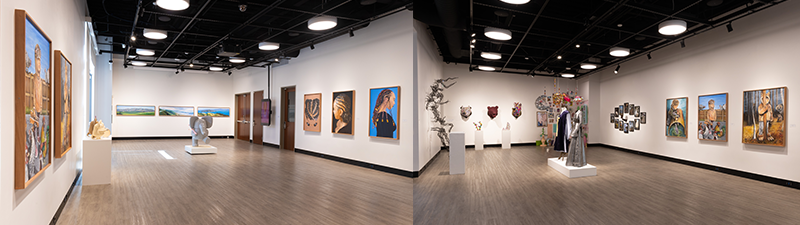 Studio Art Senior Exhibition - Be sure to come by the Art and Art History Gallery in the Edward M. Dowd Art and Art History Building before June 13 to see the amazing artwork of graduating Studio Art majors Irene Bronner, Calyn Gem Alcorin Ellacer, Faith Gonsalves-Edwards, Lauren Grover (Marketing, Studio Art), Owen Higley, Kacey Kim, Ingrid Kindel (Art History, Studio Art), Alexander Leon, Alejandro Mata, Aria Tirado, and Jenning Xuan. Photos by Nina Glick ’26 (Studio Art, Political Science)
Week 10 is already upon us! Over the holiday weekend, we received the remarkable news that our grant proposal, “Kickstarting Neuroscience Research at Santa Clara University” has been awarded full funding ($100,000) by the DeNardo Education and Research Foundation. Today, our faculty are at the forefront of addressing some of the most pressing challenges in neuroscience. This award not only allows them to continue their important research, it gives undergraduate students an opportunity to actively participate in every aspect—from study design to data collection to the co-authorship of peer-reviewed publications. Funding from this grant will be split evenly over two years and will provide for eight research assistants—two each—for newly tenured professors Lang Chen (Psychology and Neuroscience) and Laura Cocas (Biology and Neuroscience) and assistant professors Andrew Evans (Neuroscience) and Tanya Gupta (Psychology and Neuroscience), who will join us in September. The grant, which will empower students and enhance faculty research, is a true testament to the value and contributions of our neuroscience program. As we close out the year, I would like to take a moment to acknowledge the faculty who have retired or will be retiring.
These colleagues have been a part of our University for many years and together they have shaped the lives of thousands of students. Their impact as teacher-scholars, advisors, and mentors has been broadly felt and their contributions as our colleagues and friends are deeply appreciated. For this week—a time of endings and beginnings alike—here is a poem by the formidable Rita Dove. Sincerely, Daniel Testimonial
By Rita Dove
back when the smallest breezes the world called, and I answered. I was pirouette and flourish, Back when everything was still to come, Highlights
Ana María Pineda (Religious Studies) was honored on May 10 by Misericordia University, Dallas, Pennsylvania for her lifelong service and scholarship with an honorary Doctor of Humane Letters degree. Ana María was recognized as a distinguished theologian, educator, and pioneer in Hispanic ministry in the United States. The citation noted: Born in El Salvador and raised in San Francisco’s Mission District, for decades she has worked tirelessly to uplift Hispanic/Latino/a voices in the Catholic Church and to shape pastoral practices rooted in culture, justice, and faith. Her early ministry centered on teaching, parish service, and mentoring Latino/a youth and families. She served as co-director of the Diocese of San Jose’s Office of Hispanic Ministry, laying the groundwork for national conversations on Hispanic Catholic identity. Her leadership roles include teaching at Santa Clara and directing the Hispanic Ministry Program at Catholic Theological Union. One of the founding generation and past president of the Academy of Catholic Hispanic Theologians of the United States (ACHTUS), she also helped establish the Hispanic Theological Initiative (HTI), which supports Latino/a scholars in doctoral theological studies. She was a key contributor to the national Encuentros, including the V Encuentro, where she served as a keynote speaker. As an advisor to the U.S. Conference of Catholic Bishops, she has shaped national discourse on cultural inclusion and justice in the Church.
Maggie Hunter (Sociology) attended a conference at Seattle University on "Race, Racialization and Resistance: Curriculum, Pedagogy and Humanities" where she gave a presentation titled, "Diversity Requirements and the Banning of Racial Knowledge." Her talk asked the question: How can we build a forward-thinking Core Curriculum in our current political moment? The U.S. has spent the past several years mired in book bans, curricular gag orders, increasing constraints on academic freedom, and the suppression of student protest. Drawing on Audre Lorde’s theory of “the master’s tools,” her presentation described what the “tools of the oppressed” could look like and how we might use them to construct a new and insurgent core curriculum in higher education to combat knowledge suppression.
Tom Plante (Psychology) published an article, "Ethical considerations in LGBTQI+ clinical care," in Ethics & Behavior. Abstract: Much recent attention has focused on the emerging area of LGBTQI+ health care and evidence-based best practices for professionals providing physical and mental health services. Advocacy and politics have also received a great deal of press attention that impact the delivery of much needed professional health care services. Issues related to non-binary, transgender, and gender affirming health care have received perhaps the most attention and can be polarizing in some communities with politicians and state legislators weighing in and micromanaging access to available treatment as well. Psychologists and other health care professionals must be able to provide evidence-based best practices for those with whom they work that are always ethically grounded. Providing quality and ethically sound clinical health services in a rapidly changing and sometimes controversial area of work can be challenging. The purpose of this article is to highlight the primary ethical issues associated with psychological treatment of LGBTQI+ clients that highlight the need for vigilant attention to matters involving informed consent, avoiding harm, maintaining competence, offering respect, and being mindful of justice issues in providing quality healthcare services to LGBTQI+ clients and their loved ones.
Di Di (Sociology) was invited to present her research, "Who Gets Heard? Atheism, Religious Pluralism, and Engagement on Social Media," at the conference New Directions for Global Research on Religious Violence and Pluralism. Organized by the Boniuk Institute for the Study and Advancement of Religious Tolerance at Rice University, the conference was held on April 30. Di Di's study examines conversations about atheism on Weibo—a major Chinese social media platform—and explores their implications for promoting religious pluralism in a global context. On May 6, Di Di also participated in Wisdom 2.0 – Disruption, where she discussed the future of AI, technology, and spirituality. Wisdom 2.0 is a forum that addresses the pressing challenge of our time: how to remain meaningfully connected through technology in ways that support personal well-being, productive work, and global good. In conversation with Soren Gordhamer, Di Di explored the possibility of an algorithmic future for religion and spirituality and reflected on the ethical implications of such developments.
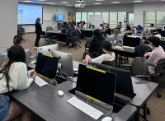
The Silicon Valley Studies Initiative, directed by Meg Eppel Gudgeirsson (History), hosted its final event for the academic year on May 2. Public historian Natalie Marine-Street from Stanford University led students, faculty, and staff in a workshop on conducting oral interviews to understand our region's past. Image: Natalie Marine-Street leads a workshop on oral histories.
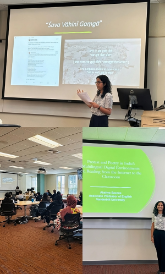
On May 15, Julia Voss (English), Supurna Dasgupta (English), and Sreela Sarkar (Communication, Director of the Digital Humanities Initiative) organized a lecture by Akshya Saxena (Associate Professor, English, Vanderbilt University). Dr. Saxena's talk was titled "Protest and Poetry in India's Multilingual Digital Environments, or Reading from the Internet for the Classroom." Her talk attracted several students and faculty from different disciplines such as English, communication, gender and sexuality studies, religious studies, and business, among others. Dr. Saxena focused on how English has altered from being seen as solely the colonizer's language to a vernacular that circulates in various forms across the global south, and how it is particularly empowering in translating protests across multilingual spaces. The talk was also part of the ENGL 157B course on South Asian Literatures. Students in that class were particularly excited to learn along with their professors through songs, poetry, and performance during an interdisciplinary conversation. Image: A composite of three snapshots from the event.
Anna also organized a panel discussing the newly released book Refounding Democracy Through Intersectional Activism by Wendy Sarvasy (Temple University Press, 2024). The book is the first in the edited book series on Intersectionality founded and led by Anna, Celeste Montoya (CU Boulder), and Julia Jordan-Zachary (Wake Forest University). Image: Anna Sampaio presenting at the 2025 WPSA conference in Seattle, Washington.
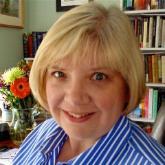
On May 17, Elizabeth Drescher (Religious Studies) presented on a panel hosted by the Loma Linda University Center for Understanding World Religions. The panel, "The Fastest Growing Religion is 'None,' How can a faith-based health sciences institution connect with people who have given up on religions?" explored the latest research on why so many young people in the United States are religiously unaffiliated and what impact that reality may have. Drescher's presentation, "The None-ing of America: Exploring Social Impacts of Increasing Religious Unaffiliation," analyzed the profound social implications of this demographic shift, within and far beyond communities of faith.
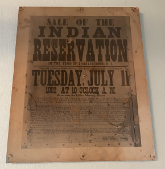
Image: Original Placard, "Sale of Indian Reservation, Charlestown, Rhode Island." 1882. Tomaquag Museum. Exeter, Rhode Island. Photo taken by author.
Danielle Fuentes Morgan (English) gave a keynote presentation at the inaugural convening of the Critical Humor Studies Association held at Pomona College. The Critical Humor Studies Association (CHSA) is an organization founded by and for scholars who utilize interdisciplinary realms of inquiry to analyze the ways humor has functioned, and continues to function, as an influential mode to both uphold and disrupt the status quo. The topic of the keynote was Critical Black Humor Studies. Danielle utilized lenses of personal experience and historicity to discuss new directions for Black comedy and comedic approaches in the 2020s.
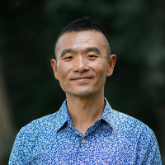
On April 12, Hsin-hung (Sean) Yeh (Modern Languages and Literatures) was invited to deliver a professional development workshop titled "美國地區大學一年級教材介紹與課程設計" (Overview of First-Year Chinese Curriculum and Textbook Design in U.S. Colleges) as part of the Fulbright FLTA training program. Drawing from his teaching experience at Harvard University, UC Berkeley, Middlebury Chinese Summer School, and Santa Clara University, Sean shared comparative insights into Chinese programs at major U.S. institutions and introduced best practices in course design for first-year learners. The teacher-training workshop covered textbook analysis (e.g., Integrated Chinese), hybrid and traditional instructional models, inclusive assessment strategies, and culturally responsive uses of ed-tech tools such as Canvas, Padlet, ChatGPT, and AIVA. Sean emphasized backward design and ACTFL-aligned learning objectives while addressing classroom equity, neurodiversity, and learner motivation in non-target language environments. His session demonstrated practical strategies to meet the challenges of diverse learner profiles and fluctuating proficiency levels in North American classrooms. This professional contribution affirms Sean's leadership in Chinese language pedagogy and his commitment to fostering cross-cultural excellence in teaching through faculty training and international collaboration.
Analyzing their mistakes affords students opportunities for improved learning and success in problem solving disciplines, especially when students are able to identify reasons for their errors and modify their future study behavior. To help students make appropriate adjustments, instructors must understand the language students use to describe their own academic performance. This study explores what students mean when they say they made “simple mistakes.” Eight students participated in interviews where they reviewed errors from a recent exam, explaining why errors were simple or not simple. We analyzed the interview data using Causal Attribution Theory and discovered how students’ attributions of their errors influence their classification of their errors as simple or not simple. Results include descriptions of simple and not simple distinctions for three categories of students and evidence of similarities among students within each category regarding their self-efficacy and persistence through struggle. Across categories, students believe simple mistakes are preventable through repetitive practice or memorization, while not simple mistakes require seeking help.
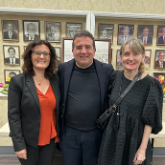
Thanks to a special collaboration with the Italian American Heritage Foundation (IAHF), Marie Bertola (Modern Languages and Literatures, IAHF Board member) and Evelyn Ferraro (Modern Languages and Literatures) organized and moderated a lecture by Professor Pietro Pinna from the University of Turin, Italy, held on April 29. Prof. Pinna presented research from his recent book, La valle del vino, focusing on the contributions of Italian immigrants to the development of California’s wine industry. Drawing on archival work and personal histories, his talk highlighted the role of these early pioneers in shaping the agricultural and cultural landscape of regions like the South Bay, once known as the Valley of Heart’s Delight. The event offered a meaningful look at a lesser-known chapter of Italian American history, particularly relevant to our local heritage. It concluded with a lively discussion and an informal opportunity to meet Prof. Pinna, exchange questions, and share community stories. Image: Evelyn Ferraro, Pietro Pinna, Marie Bertola.
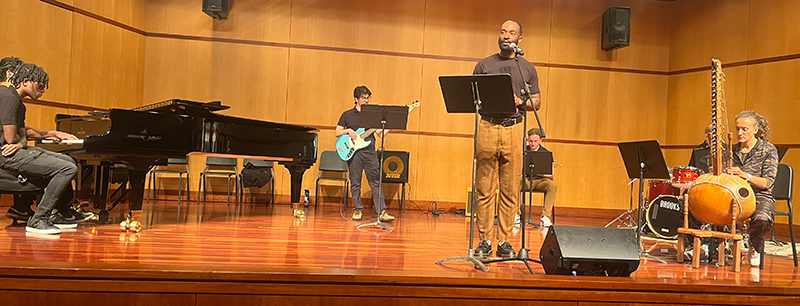
The Center for the Arts and Humanities recently hosted Poetry & Jazz, a headline event that featured acclaimed multi-instrumentalist Althea Sully Cole and SCU professor of poetry Daniel Summerhill (English). The show also included a collaboration of members of the SCU Jazz Ensemble and SCU poetry students. Special thanks to sponsors: SCU Presents, Office for Multicultural Learning, and the departments of English, ethnic studies and sociology.
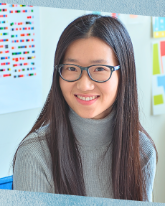
Qiuwen Li (Art and Art History) presented her talk, "Experimental Typography and System Design," at the Triton Museum of Art on May 15, as part of the Triton Talk series. In the artist talk, Qiuwen discussed her creative practice, which revolves around systematic design and experimental typography.
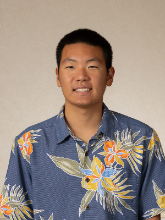
Image: Bryce Nishikawa
On Saturday, May 17, sixty students from both Psychology and Public Health presented research projects and outcomes from internship experiences at the second annual Alumni Science Conference at SCU. Student projects were mentored by sixteen faculty, including those from Psychology, Public Health, and Gender and Sexuality Studies. We are so proud of the work of our undergraduate scholars and this chance to have an interdisciplinary exchange of ideas! College of Arts and Sciences Calendar
Got IT Questions or Issues?Stop by the virtual IT drop-in sessions with Charles Deleon! These sessions are designed to provide faculty and staff in the College of Arts and Sciences a friendly and casual setting for addressing general IT questions and concerns. Feel free to drop in and out at any time during the scheduled session, whether you have a quick question, need assistance with something and don't know where to start, or simply want to learn more about our IT resources. Biweekly. Next session: Friday, June 6, 11:30 a.m. - 12:30 p.m. Zoom link
Get connected!      |
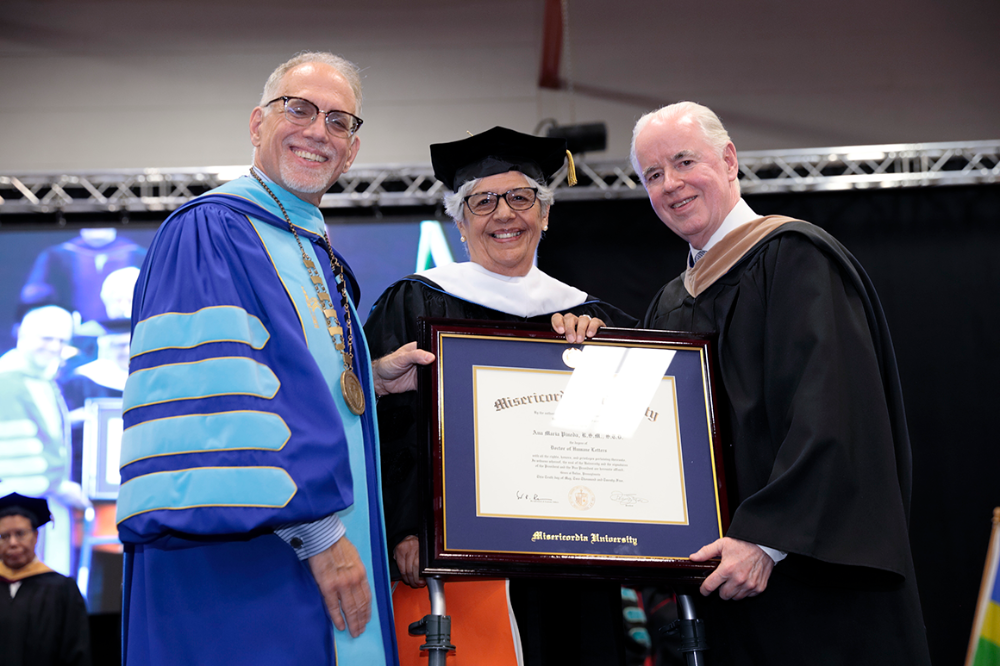 (L-R) Misericordia University President Daniel Myers, Ana María Pineda, and Misericordia University Board of Trustees Vice Chair Gregory Collins.
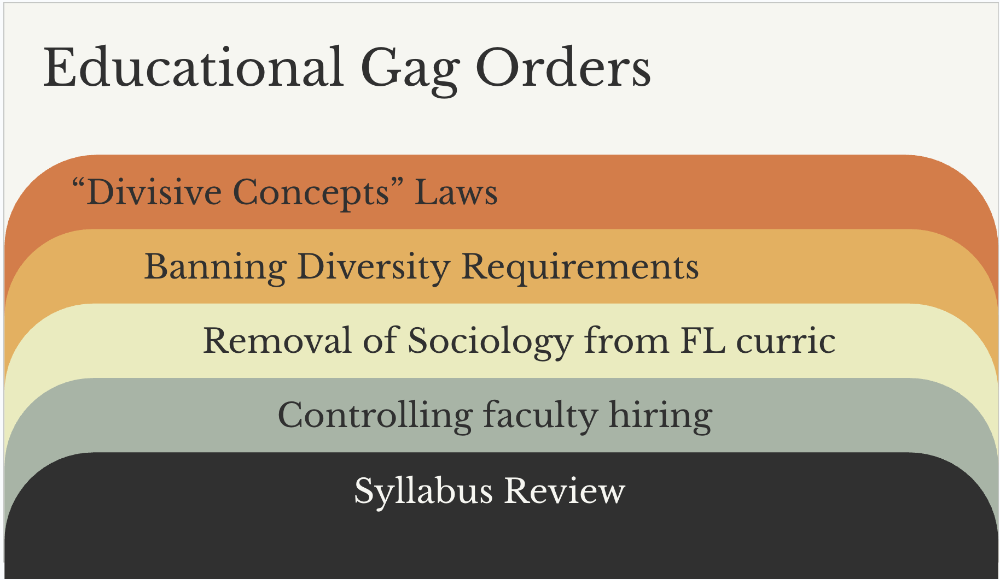 Slide from Maggie's conference presentation.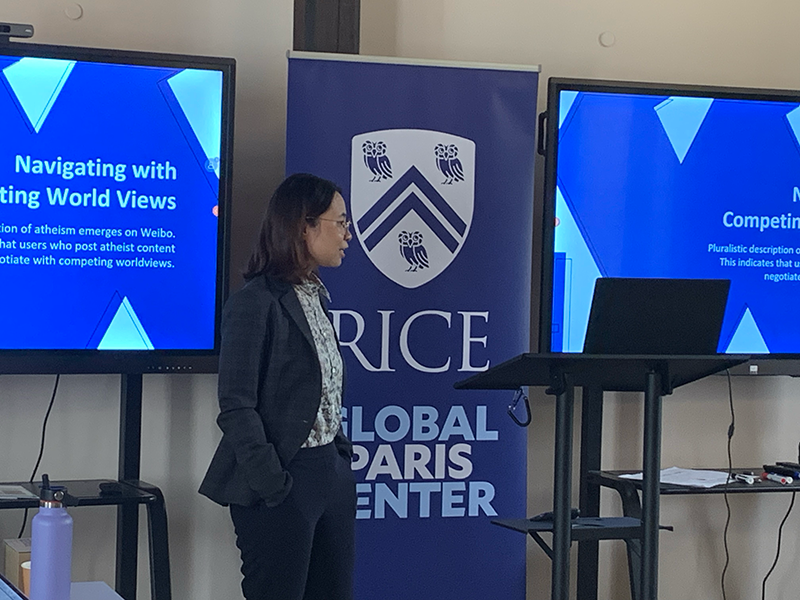
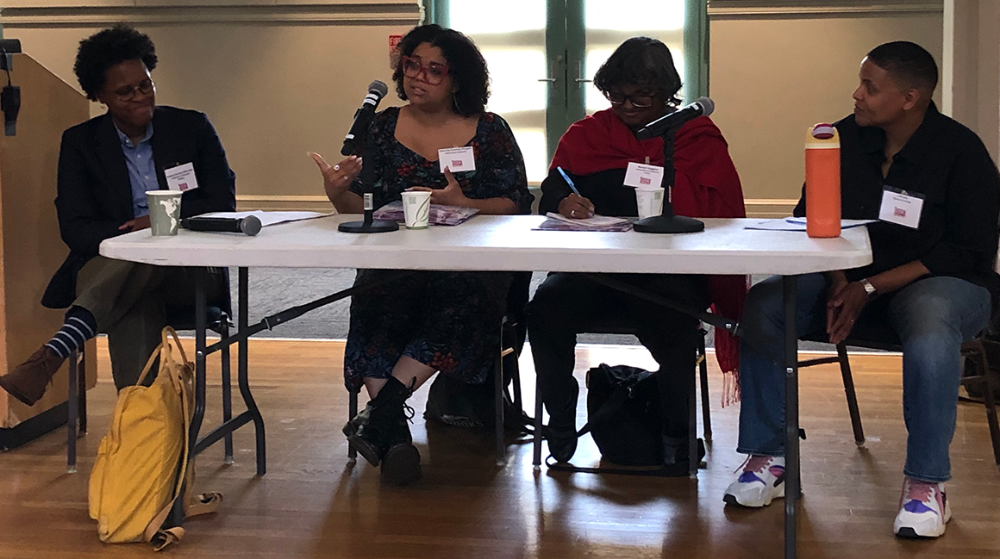 (L-R): Brittney Michelle Edmonds, Danielle Fuentes Morgan, Bambi Haggins, and J Finley at the CHSA Conference.

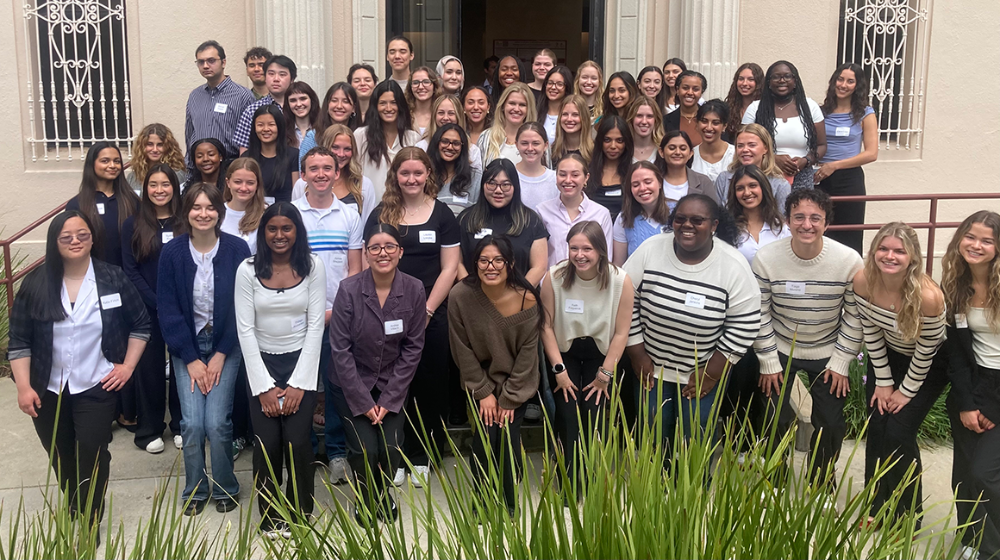 Student scholars from Psychology and Public Health in front of Alumni Science, following the second annual undergraduate research conference that bears the building's name.
| College of Arts and Sciences |
Questions? Contact Sandy Boyer |