| Trouble viewing this email? Read it online. |

| September 5, 2025 | Submit a Note |
Welcome back! It’s lovely to see the energy on campus picking up as the new academic year approaches—full of promise, opportunity and, perhaps, a little bit of anxiety. But, as students return to campus and classes begin, we’ll shake off those jitters and settle into the routines and excitement that always accompany the start of the school year. I am looking forward to hosting our annual College of Arts and Sciences Convocation at 10:30 a.m. on Tuesday, Sept. 16 in the Mission Gardens. I’ll share updates about the College and we’ll celebrate the outstanding contributions of our faculty and staff with our annual awards ceremony. We will also welcome our new faculty—even though we’ve known for months that they were arriving, it will be extra special to see them finally here! Lunch will be served on the Ignatian Lawn immediately following. I hope you’ll join us. CAS Convocation is a wonderful chance to catch up with colleagues and kick off the new academic year. Here is a poem by Rosemary Dunlap Hickler—published in 1930, it feels timeless and just right for late summer. Best, Daniel September By Rosalie Dunlap Hickler
There she’ll sit and never stir, Honey-mellow and sunny-sweet, Highlights
The Pacific Coast Branch of the American Historical Association held its annual meeting at Santa Clara University, July 31- Aug. 1. Sonia Gomez (History) organized a panel of SCU undergraduates, all history majors, who presented their senior thesis research. The students did exceptionally well; there was a good turnout, and the audience asked lots of questions. Several audience members came up to Sonia afterwards to express how impressed they were with our students. Hooray for our undergraduates!
Sonia also organized and presented on a roundtable that explored "Transpacific Kinship, Gender, Mobility and Non-Migration." Her presentation was on a project she is working on titled “The State Department is in Favor of Love and Marriage: The Origins of the Fiancé Visa."
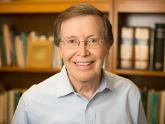
Francisco Jiménez (Modern Languages and Literatures, Emeritus) was interviewed live via Zoom by three television programs in Mexico City—Eduardo Limón on Banda Librera, Víctor Gaspar on Canal 22, and Miguel de la Cruz on Canal 11—as well as by two radio stations: Rosa M. Ocañas on Radio Nuevo León and Sergio Guillén on Radio Fórmula. Additionally, he appeared on three podcast shows: Angélica Valés on Viajeros Literarios, Víctor Cajero on Relato a Granel, and Armando Noriega on Portal del Internet. The interviews focused on his writing, particularly his book Cajas de cartón, published by Fondo de Cultura Económica. Francisco's work The Circuit Graphic Novel made the Bank Street Best Books list for 2025. “In choosing books for the annual list, committee members consider literary quality and excellence of presentation as well as the potential emotional impact of the books on young readers. Other criteria include credibility of characterization and plot, authenticity of time and place.”
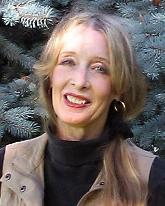
Diane Dreher (English, Emeritus) just published a new book, Pathways to Inner Peace: Finding Connection, Inspiration, and Renewal in Challenging Times with MSI Press. Pathways to Inner Peace offers a guiding light of hope in a world too often filled with stress, disconnection, and uncertainty. Blending scientific insight, spiritual wisdom, personal stories, and practical exercises, this book helps readers cultivate peace of mind and deepen their connection—to themselves, to others, and to the natural world. Inspiring and accessible, it’s a companion for anyone seeking greater clarity, calm, and meaning in daily life.
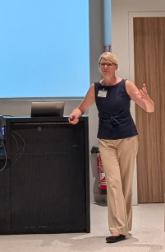
Birgit Koopmann-Holm (Psychology) chaired a session at the conference of the Consortium of European Research on Emotion in Grenoble, France, titled "Social and Emotional Dynamics in Human Interactions." Her talk, "Wanting to Avoid Feeling Negative: A Barrier to Becoming Anti-Racist," explored a powerful idea: sometimes our desire to avoid unpleasant emotions can actually stand in the way of justice. Across three studies, her lab found that the more people want to avoid negative feelings, the less likely they are to acknowledge systemic racism—and this holds true even when factoring in political beliefs, ethnicity, moral values, and mood. These findings held both in correlational and experimental studies. Her work suggests that if we want to dismantle racial inequalities, we have to be willing to sit with discomfort. Facing hard truths is hard and necessary work.
Linda Burks (Mathematics and Computer Science) presented the paper "Social, Socio-Mathematical, and Mathematical Acts Exhibited by Hispanic students during Precalculus Group Work," at the Mathematical Association of America's MathFest Conference, Aug. 9, in Sacramento. Linda collaborated with Fady El Chidiac on this study. While group work can enhance learning, it can also exacerbate inequities. Group work in precalculus courses can be especially consequential, given that students’ experiences in first-year math classes impacts their retention in STEM fields. This study examined how the social, socio-mathematical, and mathematical acts of six self-identified Hispanic students compared to those of 29 non-Hispanic students during two one-hour long sessions of precalculus group work. Data revealed that Hispanic students often took less dominant social roles and demonstrated less elaborate socio-mathematical acts, mainly explaining and assessing mathematical ideas, than non-Hispanic peers. Hispanic students contributed less accurate mathematics, used fewer higher-order strategies, and built less on others' ideas. Enhancing mathematical knowledge and fostering the belonging of Hispanic students are needed to address the observed disparities.
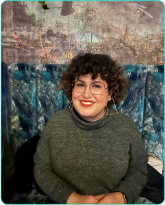
Alice P. Villatoro (Public Health) published “Stigma Affects How Parents Respond to their Children’s Mental Health, But Does Child Gender Complicate the Story?” in Stigma and Health. This study explored how different dimensions of mental illness stigma shaped whether parents sought formal mental health providers (e.g., psychiatrist, counselor), medications, or informal support for their adolescents, and whether these patterns differed by their child’s gender. Results showed that when parents recognized and labeled a mental health problem, they were more likely to seek formal providers, particularly for girls, but not boys. Conversely, parents who held negative views about people with mental illness were less likely to have their child use medication, again with stronger effects for girls than boys. Although this study examined gender as a binary construct, Villatoro and colleagues underscore the urgent need for future research on how stigma may differentially impact help-seeking for parents of children with diverse gender identities. These findings deepen our understanding of how stigma and gender intersect to influence access to mental health help-seeking and point to the need for equity-focused mental health interventions.
Together with her students Naomi Hernández Villaseñor ’26 (Psychology, Philosophy), Liam Llerena ’24 (Psychology), Evita Morales ’26 (Psychology), Jack Tillman ’26 (Psychology) as well as with collaborator Dr. David Ruiz Mendez from the the Universidad Nacional Autónoma de México, Birgit Koopmann-Holm (Psychology) recently published a new article titled: “Compassion in Mexico and the United States: Unpacking Cultural Differences” in the journal Behavioral Sciences. Their study offers meaningful insights into how cultural views of emotion shape our understanding of compassion. Specifically, they found that Mexican participants were less inclined than U.S. American participants to avoid feeling negative emotions and place more emphasis on sharing emotion while responding with compassion.
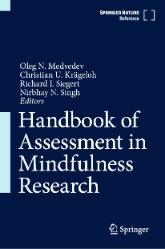
Tom Plante (Psychology) published a chapter on the assessment of compassion in the following edited volume: Plante, T.G. (2025). Santa Clara Brief Compassion Scale (SCBCS) in Medvedev, O.N., Krägeloh, C.U., Siegert, R.J., Singh, N.N. (Eds.). Handbook of Assessment in Mindfulness Research, (pp. 1089-1095). Springer, Cham. Abstract: Compassion seems to be in very short supply in our deeply troubled world. Yet efforts have been underway to develop and nurture compassion for both self and others by researchers, clinicians, clerics, both private and public organizations and institutions, among others in recent years. A more compassionate world would be a better world for everyone. Research has also suggested that contemplative and meditative techniques, such as mindfulness, can increase compassion for self and for others as well. Interest in compassion means that quality assessment techniques must be readily available and accessible for researchers, clinicians, policy makers, and experts in many diverse fields. Measures need to be reliable, valid, and easy to use, score, and interpret. They also need to be affordable and ideally free to use. The purpose of this chapter is to introduce the Santa Clara Brief Compassion Scale (SCBCS) published in 2008. An introduction to the scale, information about reliability, validity, and utility, and a brief summary of some of the global research conducted using the scale is provided.
Alberto Ribas-Casasayas (Modern Languages and Literatures) was the co-organizer of the panel "The Psychoactive Experience in Latin American Literature: Ethical, Aesthetic, and Cultural Considerations" with Ana Luengo (SFSU) at the conference of the Instituto Internacional de Literatura Iberoamericana in Lima, Perú. They delivered the presentation “A Proposal for a Psychedelic Literary Criticism,” arguing for a recentering of the psychoactive (more specifically, psychedelic) experience in literature in Spanish from the Middle Ages to the present.
Daniel Jacobius Morgan (Religious Studies) presented a paper entitled "Naqshbandi Shaykhs and Kasmiri Shaykhs in Eighteenth-Century Delhi" at the 10th Biennial Convention of the Association of the Study of Persianate Societies held in Tashkent, Uzbekistan. Drawing on a range of Persian-language tazkiras (biographical dictionaries) and letters, the paper reconstructed the scholarly and devotional networks of Naqshbandi Sufis that linked Delhi, the imperial capital of the Mughal Empire, with the distant province of Kashmir in the period 1586-1762. While the major eighteenth-century Naqshbandi reformer Shah Wali Allah of Delhi is often linked to intellectual networks in Arabia, the paper showed that he had far stronger social and intellectual ties to the diasporic Kashmiri community in Delhi who supported him financially and whose gatherings provided the first context for the popularization of his ideas.
Tom Plante (Psychology) and Jaime Wright (Religious Studies) represented SCU at the Interfaith Leadership Summit—the nation’s largest gathering of students and educators dedicated to advancing American religious pluralism—in Chicago, Aug. 8-10. Tom, Jaime, and Dan Turkeltaub (Classics) are co-PIs on an Interfaith America grant to support teaching, research, and collaborative interfaith projects on campus. While at the Summit, Tom and Jaime had the opportunity to talk with Eboo Patel—founder of Interfaith America and author of this year’s SCU Community Read, We Need to Build: Field Notes for Diverse Democracy.
This August, Madeline Ahmed Cronin (Philosophy) was a moderator for the Rodel Fellowship. This fellowship is a nationally recognized leadership development program for elected leaders at the state and federal level. Each year, the program selects 24 outstanding elected leaders (divided equally between political parties) to come together for a series of seminars dealing with ethical values, democratic principles, and wise and effective leadership. Madeline led a session on pluralism in political philosophy entitled “What America Means to Us.” Reflecting on the experience, she was impressed by the way in which these officials sought to support each other across disagreement in the hard work of political leadership and in strengthening their commitment to democratic principles.
Iris Stewart-Frey (Environmental Studies and Sciences) participated in two deeply inspiring gatherings this June: The Jesuit University in the 21st Century: A Project of Hope for the World at Loyola University of Seville (together with Rocio Lilen Segura and Allan Baez Morales from the School of Engineering), and Ten Years of Laudato Si’: Challenges and Hope at the Pontificia Università Gregoriana, the Vatican University in Rome. Both conferences brought together global leaders from Jesuit institutions to advance academic collaboration, research, and advocacy rooted in Jesuit values. At both events, she presented Santa Clara University’s work, spearheaded by the Environmental Justice and the Common Good Initiative, on transdisciplinary, community-engaged research and teaching focused on Integral Ecology and environmental/water/climate justice. These conversations reaffirmed the urgent need to respond to the accelerating ecological crisis through hopeful, justice-centered action and highlighted the potential of the Jesuit higher education network to lead with courage and collaboration. We gratefully acknowledge the Ignatian Center for travel support.
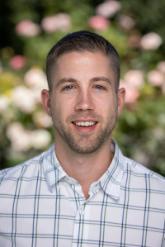
In June, Tripp Strawbridge (Modern Languages and Literatures) presented at the 34th conference of the European Second Language Association (EURO SLA) in Tromsø, Norway. The presentation, titled "Examining second language and intercultural development in study abroad through a social network lens," presented preliminary findings from a project that analyzes a variety of factors that may influence students' Spanish language learning in study abroad. This presentation highlighted the influence of certain social network traits (e.g., average social group size, Spanish language use) on both Spanish language acquisition and the development of "cultural intelligence." Travel to this conference was supported by CAS Dean's Grant.
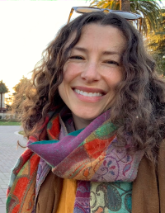
Brita A. Bookser (Child Studies) published an empirical article in the Journal of Research in Childhood Education entitled, "'I Wouldn't Really Call It a Suspension, But—It Could Be Called a Suspension': Novel Forms of Discipline in Preschool" in August. This article presents Brita's timely mixed methods investigation of exclusionary discipline in early childhood settings before and during the COVID-19 pandemic. Despite increasing regulation and prohibition of formal measures of exclusionary discipline (e.g., suspension, expulsion) across public preschool programs in the United States, this research indicates that subtle and novel measures exist and continue to impact children and families. Novel forms of exclusionary discipline span early release before the end of the school day, removal from the classroom, referral for clinical assessment, "mute" during distance learning in the virtual classroom, and a family's disenrollment of their child from the preschool, and appear to be explained by teacher and staff ideas about a child's need for correction or treatment of pathology. This study adds to a nascent body of equity-focused research about exclusionary discipline in early childhood settings and expands measurement and conceptualization of school punishment.
Get connected!      |
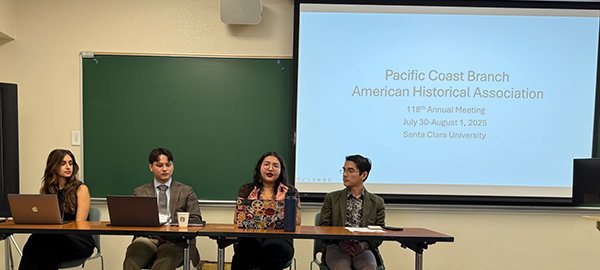 (L-R) Francesca Tapper, Samuel Cao, Jacklyn Alonzo Heredia, and Dylan Ryu.
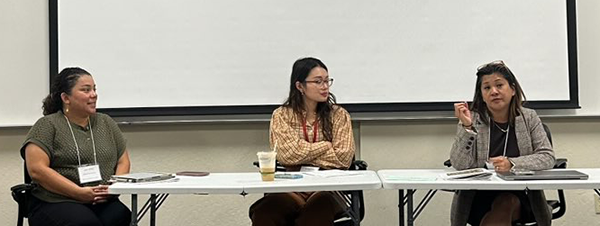 (L-R) Sonia Gomez (SCU), Ann Ngoc Tran (UCLA), Rose Cuison-Villazor (Rutgers Law)
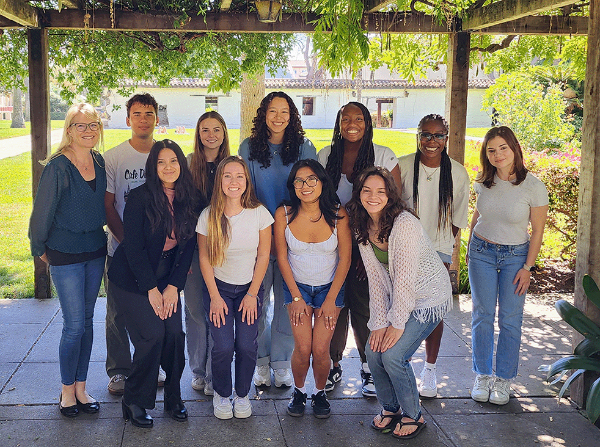 Birgit Koopmann-Holm (left) with Jack Tillman (2nd from left), Naomi Hernández Villaseñor (3rd from left), and Evita Morales (7th from left).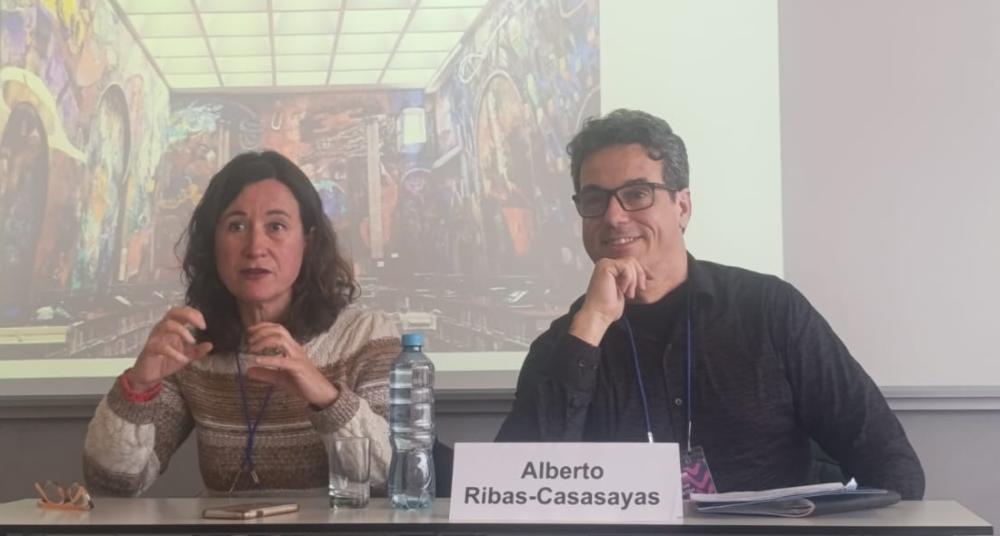
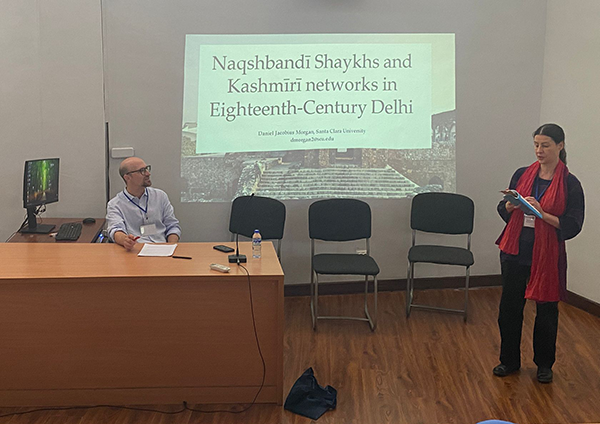 Daniel Morgan at the 10th Biennial Convention of the Association of the Study of Persianate Societies held in Tashkent.
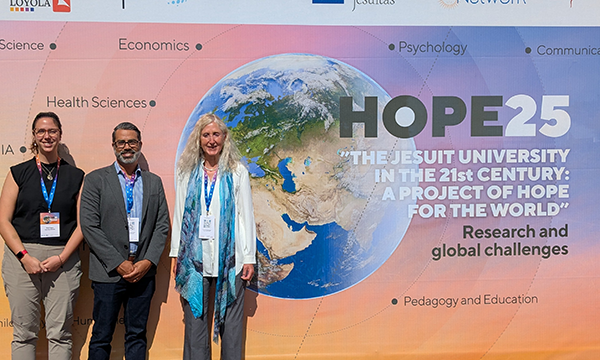 (L-R) Rocio Lilen Segura, Allan Baez Morales, and Iris Stewart-Frey at the Hope 25 Conference in Seville.
| College of Arts and Sciences |
|
Questions? Contact Sandy Boyer |