News Stories

Santa Clara University Shapes Ethical, Empathetic Leaders with New Social Impact Leadership Master’s Program
Social Impact Leadership
For college graduates looking to kickstart a career in nonprofit, social enterprise, or philanthropic leadership, the path hasn’t always been clear. Many public administration programs have lacked the business acumen necessary to run an impact organization effectively, while many MBA programs don’t fully equip students with the empathy or cultural competency needed to fully understand the communities they intend to serve.
Santa Clara University is working to solve this problem.
This fall, the School of Education and Counseling Psychology (ECP) is launching a new interdisciplinary graduate program that combines the fields of business, education, and social entrepreneurship to prepare students to lead social impact organizations.
As one of the first graduate programs of its kind, the MA in Social Impact Leadership is a part-time, 15-month program that focuses on business strategy, ethical leadership, and cultural awareness to ultimately serve communities facing systemic economic, social, and environmental challenges.

“Our goal is to deliver a program that provides early career professionals with the business acumen they need to work within these social enterprises, but also with servant leadership strategies as well,” says ECP professor and associate dean, Marco Bravo, who helped develop the program in collaboration with the Leavey School of Business and Miller Center for Global Impact. “Our interdisciplinary approach will equip students with all the right tools to lead in a holistic, more humanizing way.”
Rooted in Santa Clara’s Jesuit values and educational mission, the curriculum will be taught by faculty from across the University. Coursework will be centered around three main pillars: leadership development, business management, and community engagement. Through the program, students will develop a variety of different skills, including how to build and manage teams, budget for large organizations, and lead with empathy while addressing community needs.
“We will start students off with some foundational knowledge about the theory behind social impact organizations, why they exist, and why we need them. Then, we’ll move into helping them understand ways in which they would lead within these spaces,” adds Bravo. “We’ve been very thoughtful about the courses offered and when, so that students have an opportunity to build that knowledge base and begin to practice those skills during their internship experience.”
The program takes a unique interdisciplinary approach, enabling students to study multiple disciplines at once and integrate their learning for a deeper, more cohesive understanding of the curriculum. For example, students might take a qualitative leadership course about data-driven decision-making alongside an accounting class, allowing them to see how business skills and social leadership intersect.
The degree culminates in a final internship placement, facilitated by Miller Center for Global Impact, where students will gain hands-on experience in the workforce and complete a capstone project informed by their collaboration with the communities they serve. Since 2003, Miller Center has built an extensive network of social enterprises around the world dedicated to addressing some of today’s most pressing challenges. An industry leader in the impact ecosystem, Miller Center has supported organizations in more than 100 countries and helped thousands of entrepreneurs scale their businesses to create meaningful change.
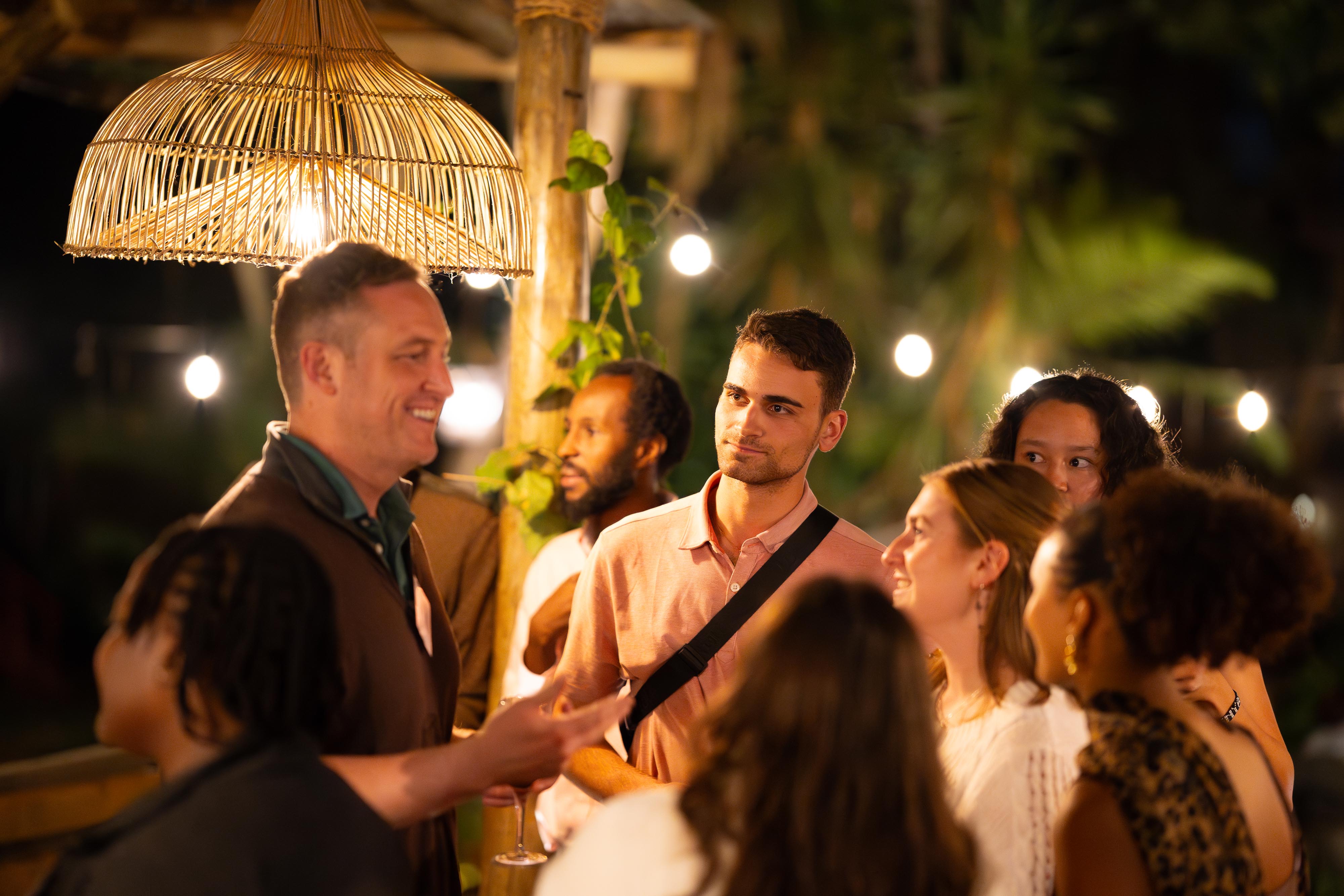
As part of this internship component, students will also be paired with a mentor currently working in the social sector who will offer personalized guidance and help lay the foundation for their professional growth.
“Their paths will vary: some will work directly in social enterprises, others with foundations and impact investors, and others with ecosystem support organizations in the U.S. or abroad. Some will launch their own ventures. Others will work within sustainability units of large corporations,” says Brigit Helms, executive director of Miller Center for Global Impact. “We envision graduates as changemakers advancing a more just, humane, and sustainable world.”