
Director, Journalism and Media Ethics
408-551-7070
svincent
Subramaniam (Subbu) Vincent directs the Journalism and Media Ethics program. He focuses on applying sourcing intelligence and ethics to the news ecosystem as a whole, from the supply side (journalism and media content) to AI-driven distribution and discovery. His work includes benchmarking LLMs (2024-25) for information source detection and quality measurement and convening the News Distribution Ethics Roundtable, bringing together product, policy, and Trust & Safety leaders to discuss distribution fairness, producing transparency recommendations (2022) and use cases (2024).
He advised CNTI’s global public survey (2024-25) on news and AI. He served on the Partnership on AI's steering committee for AI and Local News, and has trained professionals on OSINT and media ethics. He mentors undergraduate and graduate students from the humanities, social sciences, and engineering.
Previously, Subbu led a cross-disciplinary university engineering-media ethics team developing news annotation software analyzing 1.3 million articles for source diversity (2021-22), and partnered with WordPress/Newspack to create the Source Diversity Dashboard (2023), demonstrating to 20+ US newsrooms how AI with human oversight enables on-demand source tracking. As Tech Lead for The Trust Project, he guided 30+ global news brands in implementing transparency metadata standards.
A Forbes contributor on media practices and AI, Subbu applies a democracy lens to his analysis and is frequently quoted on media policy. He holds the prestigious John S. Knight Fellowship Award from Stanford University (2015-16) and received the Distinguished Service award from the Society of Professional Journalists (NorCal, 2022). He also sits on the Board of KALW Public Media (91.7 FM), a leading San Francisco Bay Area news, music, and podcast outlet.
Recent Publications
Fairness-Aware Race and Ethnicity Detection From Names, Xiaoxiao Shang, Zhiyuan Peng, Subramaniam Vincent, Yi Fang - IEEE Access, 2025.
AMICA: Alleviating misinformation for Chinese Americans, Xiaoxiao Shang, Ye Chen, Yi Fang, Yuhong Liu, Subramaniam Vincent, Proceedings of the 46th International ACM SIGIR Conference on Research and Development in Information Retrieval (2023)
Reorienting Journalism to Favor Democratic Agency. Subramaniam Vincent. Chapter in Reinventing Journalism to Strengthen Democracy Kettering Foundation. (April 2023)
Political bias indicators and perceptions of news. Kathryn Bruchmann, Subramaniam Vincent, and Alexandra Folks. Frontiers in Psychology. (April 2023)
Could Quoting Data Patterns Help in Identifying Journalistic Behavior Online? International Symposium of Journalism, #ISOJ. Subramaniam Vincent, Xuyang Wu, Maxwell Huang, and Yi Fang. (April 2023)
Combating Misinformation/Disinformation in Online Social Media: A Multidisciplinary View Authors: Mauro Barni, Yi Fang, Yuhong Liu, Laura Robinson, Kazutoshi Sasahara, Subramaniam Vincent, Xinchao Wang, Zhizheng Wu. APSIPA Transactions on Signal and Information Processing. (2022)
Challenges and Opportunities for Local Journalism in Reinventing Political Coverage, Subramaniam Vincent and Don Heider. Journalism & Communication Monographs. (Dec 2022)
"DIANES: A DEI Audit Toolkit for News Sources," April, 2022. Our technical paper documenting SCU-Markkula's DEI News Article auditing system accepted at the 45th International ACM SIGIR Conference on Research and Development in Information Retrieval. Authors: Xiaoxiao Shang, Zhiyuan Peng, Qiming Yuan, Sabiq Khan, Lauren Xie, Yi Fang, Subramaniam Vincent.
“Our Opinion: Recommendations for Publishing Opinion Journalism on Digital Platforms”, NewsQ technical recommendations paper co-authored with Patricia Lopez, Opinions Editor, Minneapolis Star Tribune. (Inputs from David Agraz, Leona Allen Ford, Jon Allsop, Rochelle Riley, and Rebecca Traister.)
"Understanding the Demand-side of Misinformation and Analyzing Solutions", chapter in "Fake News: Real Issues in Modern Communication", book published by Peter Lang in 2020. Editors: Susan Drucker, Russell Chun.
"Ethics-Driven Product Management for News, contribution with Don Heider" in "Product Management in Journalism and Academia" forum series published in Journalism and Mass Communications Quarterly, June 2020.
Articles by Subbu Vincent
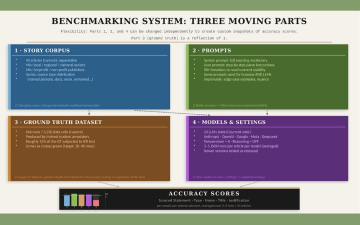
This benchmark provides news feed product designers, journalism researchers, news organizations, and AI model developers with performance metrics for evaluating LLM capabilities in analyzing sourcing of news stories at scale.

When might a newsroom not “report” the stories of people and instead let them have the microphone? One answer to this came from Greg Eskridge of KALW’s award-winning podcast Uncuffed.

How might students systematically record the use of sourcing and attribution present in everyday news stories? Use this standalone guide to annotating sourcing. It comes with all the crucial definitions and media ethics context you'll need, examples, instructions, and template spreadsheet.

This resource will provide guardrails for everyday news headlining for headline writers in newsrooms, including news editors, SEO specialists and social media editors.
 Its Framing Power, and Relation to Privacy and Free Speech
Dignity as a word has framing power. It can help expand the listening window when discussing societal challenges such as disparities and injustices. Three reading references for you to explore this possibility.

Human dignity is taken to mean the inherent and equal worth of all humans in a moral-political sense.

Why did the affordability crisis, misinformation, immigration chaos, and endless wars not split the Black women’s vote? Civic duty and protecting hard-won freedoms.

U.S. Journalism leaders offer lessons and moral framing to help political reporters better cover low-income and poor Americans as voters.
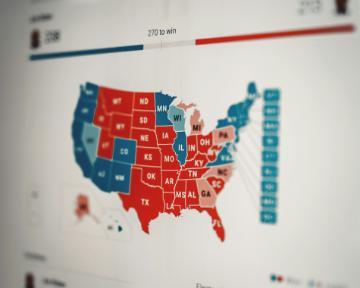
The Kamala Harris-Donald Trump presidential debate missed the voices of America's biggest category of 'swing voters'--low-income and poor people.
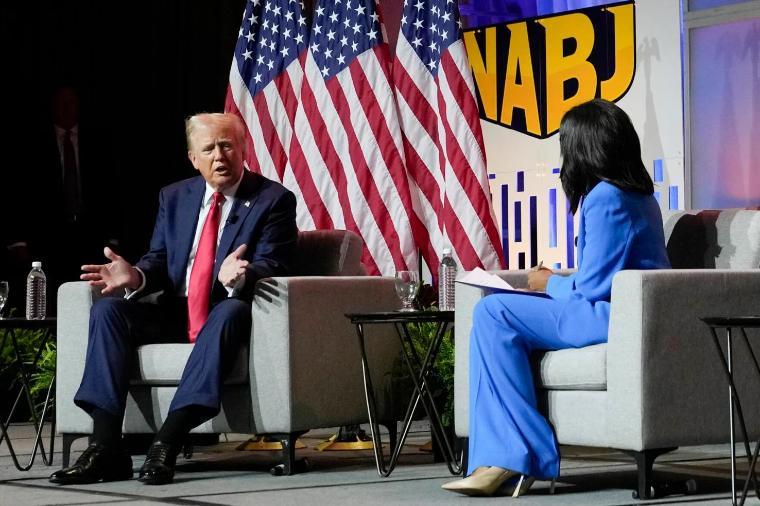
At the NABJ convention in Chicago on July 31st, Donald Trump Asked Rachel Scott To Define DEI. She Should Have.

How might a 90-minute format accommodate a limited review of lies and false claims in near real time? There is a way, using collaboration and a little friction.

Nothing comes close to a flashpoint like Forbes’ recent accusation about Perplexity AI. This is a unique moment because it is about journalistic labor and form.

Of the roughly 2000+ stories on protests, conflict and violence on U.S. university campuses during Apr 29-May 3, a mere 23 stories or roughly 1% ran with headlines about agreements and deals universities struck with students.

NBC reversed itself on the hiring of Ronna McDaniel after the network’s top anchors mounted a revolt on air. We need a pro-democracy standard.

New investments are flowing into local news in American cities. But to democratize storytelling, the way reporters identify people as sources needs to change.

How might news platforms and products ensure that ethical journalism on chronic issues is not drowned out by the noise of runaway political news cycles?

The (DEI) Audit Toolkit for News helps journalists track the diversity of the expert quotes used in article drafts, providing real-time updates and helping reporters ensue equitable representation of the communities they cover.

Journalism brands can learn something after recent reports of Sports Illustrated (SI) running “product review” articles by synthetic authors.

The analysis of openly available or accessible digital footage and data to answer intelligence questions is particularly useful as an independent truth-determination capacity at times of conflict.

Cataloging stories from the grassroots of real impact will show another kind of pressing forward. A society pressing forward to make democracy work, and in doing so help reimagine local journalism itself.

There is worry about an increase of deceptive generative AI-based political ads, triggering more confusion as the political season heats up. That in turn, will make lies easier to sell.
How might news platforms and products ensure that ethical journalism on chronic issues is not drowned out by the noise of runaway political news cycles?

Why do people disagree so passionately about what is right and how can journalists unpack political speech and reframe their questions to get past those disagreements?

Should the news media industry should use Generative AI for journalistic writing?

Subramaniam "Subbu" Vincent was honored with SPJ NORCAL's Distinguished Service to Journalism award.

A new application helps journalists track the diversity of the expert quotes used in article drafts, providing real-time updates and helping reporters ensue equitable representation of the communities the cover.

In a comparison of the summer 2020 Black Lives Matter protests and riots and the January 6, 2021 protests and insurrection, there are important similarities and distinct differences.

Subramaniam Vincent and Courtney Davis ’21 of the Markkula Center for Applied Ethics provide comment to Facebook’s oversight board on the ethical considerations of Donald Trump’s deplatforming.

The news media has historically oversimplified and stereotyped coverage of people of color in general and Asian-American communities in particular.