Time as Water: A Metaphor to Embrace the Fulbright Experience
Jesica Siham Fernández, PhD; Santa Clara University Associate Professor, Ethnic Studies Department
Opening—Time as Water
When I arrived in Florence, I was greeted by the fresh rains that announced a transition into spring. The whisterias were in full bloom, and the olive trees were shedding their last offering. I was welcomed by chiming church bells, the breeze from the mountain tops, and the smells of trattorias slowly cooking their best ragu. It was April, eager to begin my Fulbright-Schuman Fellowship at the European University Institute (EUI), I was both nervous and excited for what my four months abroad would bring.
With the intention to reflect on my experience, as well as offer prospective Fulbright Fellows some guidance on how to embrace a unique opportunity to live and pursue research abroad, I use “water” as a metaphor to describe time. Specifically, my time in relation to research, people and contexts. In this brief reflection, I offer three perspectives for Fullbright Fellows to consider that are seemingly characteristics of qualities found within water that can help us orient ourselves differently to time. These perspectives—fluidity, impermanence and expansiveness—can also be understood as mindset to help us develop strategies to best embrace moments of change. I describe each one through reflections that draw from what became quotidian while abroad, as well as my research.
Fluidity, impermanence and expansiveness can appear as abstract concepts difficult to characterize or describe. However, for me these were fundamental in helping me adapt, settle and fully embrace my short-term fellowship. Water and time are two materialities that can help us better understand the meaning of fluidity, impermanence and expansiveness. The prevalence of these associations is most salient when I reflect on the start and conclusion of my fellowship. In fact, upon arriving I was greeted by rainfall, and on the night before my return flight to home, showers of thunder and humidity enveloped the Duomo rising tall above all other buildings in the heart of Firenze.
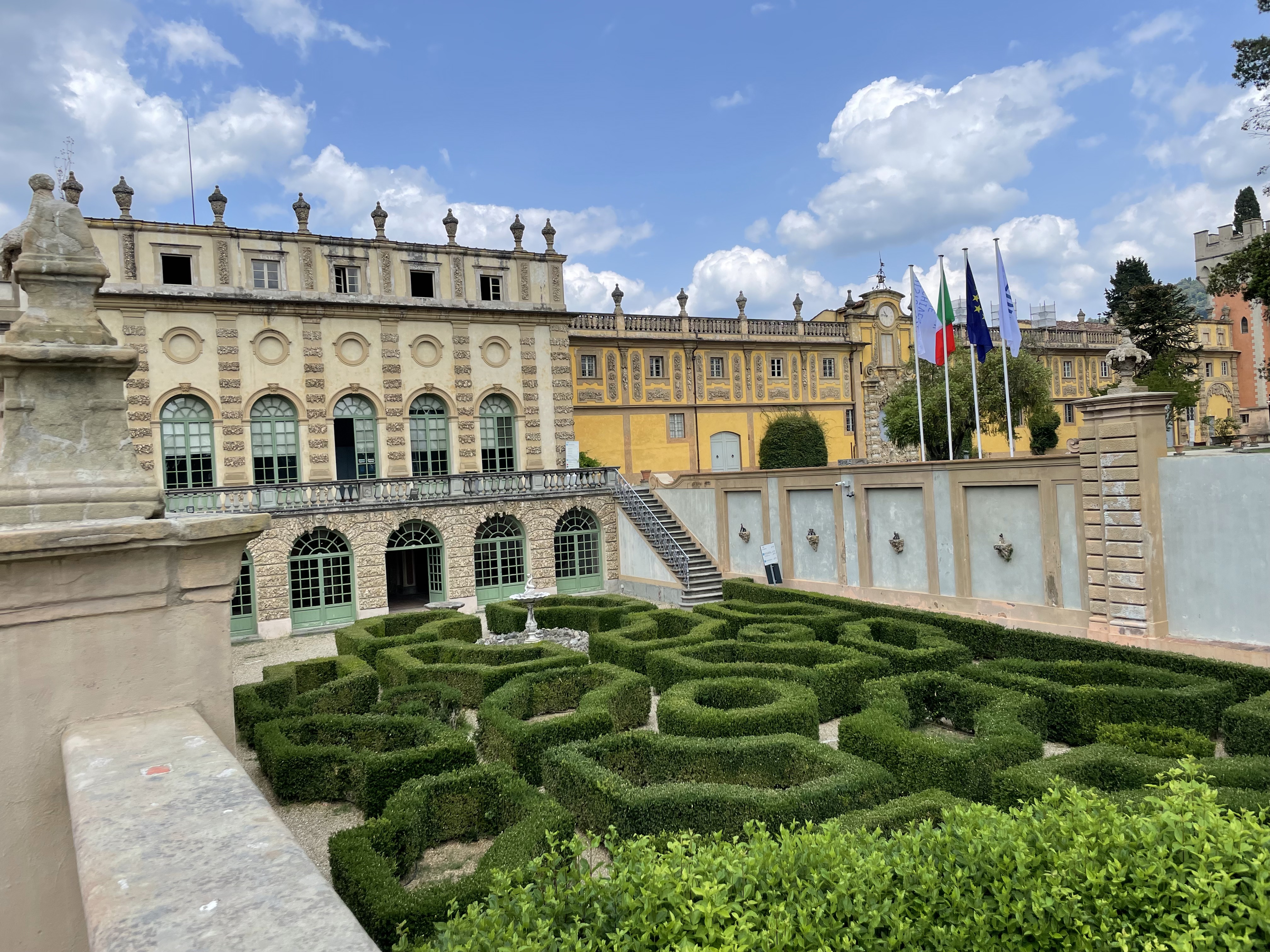
Photo by Jesica Siham Fernández of the Historical Archives of European Union (HAEU)
Three Perspectives
Fluidity
Time, like water, is fluid. It is always in motion; ever flowing, turning, bending and moving in whichever way it can. Time moves forward, and water often does the same by the pull of gravity. From April until August I spent time reflecting on time at the Historical Archives of the European Union (HAEU). I pursued archival research on the history of the Young European Federalist (YEF) movement, formerly the Jeunes Européens Fédéralistes. I focused on the development of the YEF between the 1950s to the late 1980s. Time, like water, demonstrated or reflected the organizing, activism and political tenacity of the YEF movement. Specifically, the fluidity of discourses characterized the YEF’s capacity to give shape to new ways of being and experiencing the world as youth activists. I too was flowing as I was allowing the documents to direct my research inquiry and process. On my one hour to ninety minute bus ride I often pondered whether the young people of Florence felt connected to Europe, and compelled to organize themselves toward a more solidified European Union. I listened to conversations among phenotypically diverse Italian youth that ranged from calcio to the latest trends on Tik Tok to freedom for Palestine. The bus offered me invaluable moments to put the past in its present context, as well as to observe people move about their day like water. As a Fullbright Fellow, consider the fluidity of water to help you discern the path of your research, and your experience abroad; it will flow in the direction that is best for you. Trust the path.
Impermanence
Time is always impermanent, as is water when it alchemises into different material forms: liquid, solid, vapor. The only quality of living that is constant is change. Both water and time are a reminder that all is transitory. What initially felt as a long time to be away from home and family soon became absorbed into a short time for immersiveness in a new country and culture, and the pursuit of new research projects and collaborations. To be and remain adaptive while abroad was a skill I had to develop because change was happening constantly around me. I was learning new ways to communicate with my fractured Italian, exploring the cuisine, art, history and culture of different regions from the southernmost tip end of the boot in Santa Maria di Leuca to the stretched thin coastal area of Liguria, known for its highly tourist sights in Cinque Terre. Time, while it can be measured and quantified, is ephemeral. While some may live by the ticking of the clock, like water held in our hands, the steam of a tea cup or blocks of flavored iced granita, time escapes us. Cultivating a sensible understanding of time as constantly changing offers perspective on how most aspects of life are beyond our capacity to control. Yet, the richness of these archives offer us a radical sense of hope that change will always unfold toward the greater common good. That is, one where collectivity, connectivity and care will rise above greed, violence and supremacy.
Expansion
Time is expansive, just like water. What is expansive is open. I invite Fulbright Fellows to make time for unscheduled time because doing so can allow for new experiences, opportunities, and ways of seeing and being to emerge organically. To be unbounded by time means to be flexible with any set or anticipated expectations, standard or criteria—the checklists that as academics we hold with such precious high regard. Thinking of time as water can offer us inspiration to create space, which is time to be in the moment presently and mindfully. While commuting on public transportation to and from my small apartment in Settignano to the hillstops of Fiesole, where the EUI campus is closely located, I had to be expansive. Greeting and connecting with those on the bus whom I had come to see regularly helped me foster a sense of community. A feeling of belongingness and relationality with those around me developed as time expanded from one day to one week to one month and eventually four months. Over time, I came to learn of one woman’s family living in Peru while she works as a caretaker for the elderly in Coverciano. With joy I would see every morning the same old couple hand in hand claim their seat at the front of the bus. Time and time again others would cede their seat to them, and the mothers with strollers, grocery carts and limited mobility. The bus was rarely on time, yet I was keen on being expansive, like water, and letting time run its course.
On those longer commutes because of rerouted lines, overheated busses that failed to restart or closed streets due to historical calcio Fiorentino, I read Gramsci, Murakami, and a random book I picked up at the San Francisco airport upon departing home: The Book of Ichigo Ichie: The Art of Making the Most of Every Moment, the Japanese Way. The concept of ichigo ichie (which loosely translates to “once in a lifetime”) became the compass to guide me in making the most of my Fulbright Fellowship. Building in unstructured time into my day helped me invite and invent creative possibilities for deep reflection, wonder and curiosity. I offer expansiveness as a strategy to help Fellows widen their perspective on culture, politics, society, and of course research. Doing so can lead to creating a more profound, perhaps more open worldview—seeing beyond who we are and where we come from to where we are at any given moment and who we are in community with as we move like water about our days. Open your heart, and the mind will open—or settle down a bit.
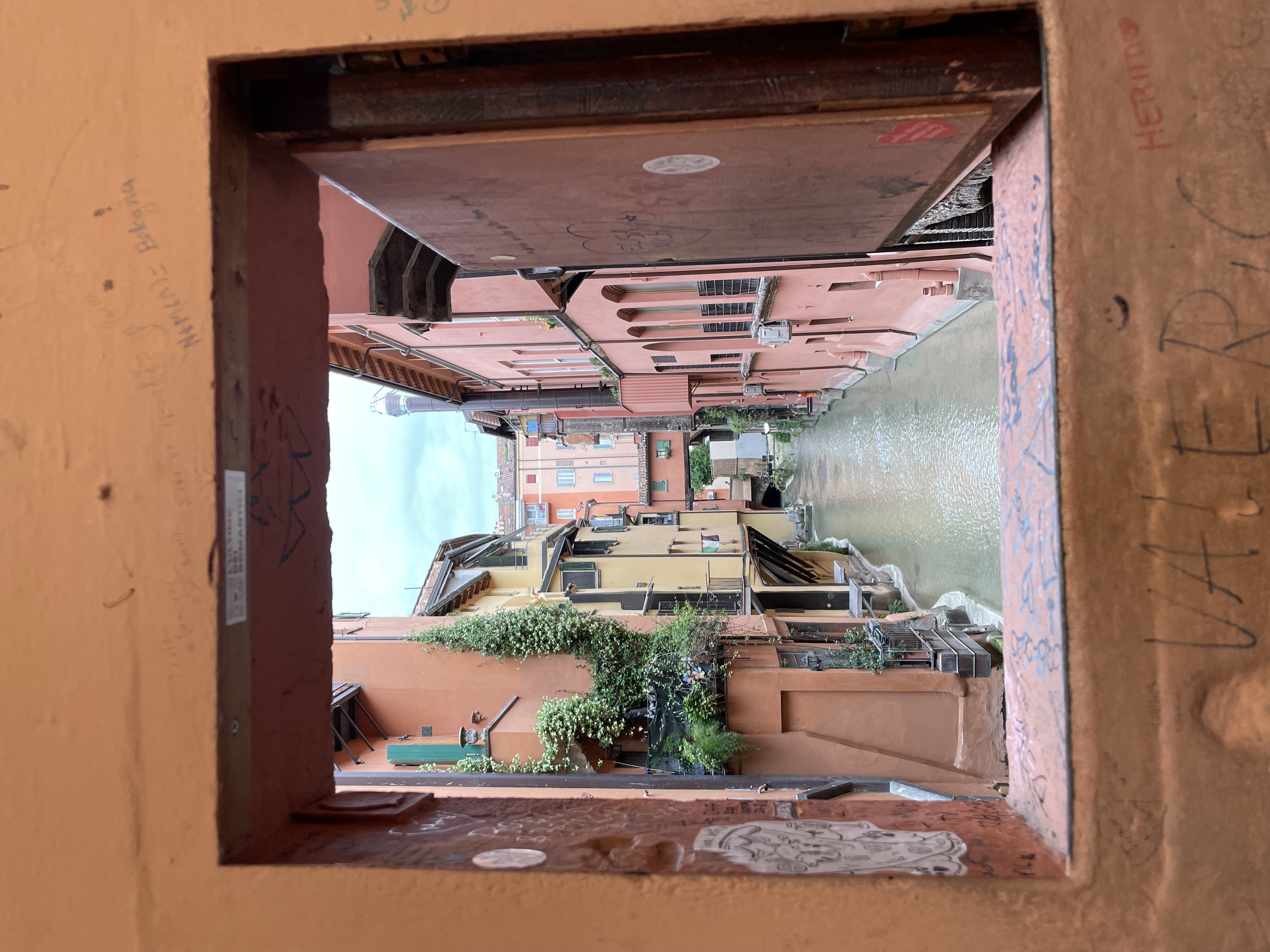
Photo by Jesica Siham Fernández of La Piccola Venezia (the Little Venice Window) in Bologna, Italy
Closing
Fluidity, impermanence and expansiveness as reflected in my research on the history and sociopolitical development of the YEF movement, together with the wonder and curiosity with which I adapted, settled and embraced my time in Firenze, are perspectives that I strive to put into practice now as I readjust to being at home in the United States of America. It seems as if time stood still while I was away from home, yet the political climate and discourses indicate otherwise as funding for scientific research, climate change, reproductive health and diversity centered initiatives have been cut or under heightened scrutiny. Indeed, these are challenging and uncertain times. Similarly, any prospective experience abroad can also come with challenges. Yet these moments must be thought of as water running their course.
I offer a closing metaphor: the Arno River. For centuries the Arno River served as a lifeline connecting peoples and regions across a yet-to-be Italian Republic. Today, as it stretches along Florence, it brings people from all around the world to see the most breathtaking Tuscan sunset at the horizon of Ponte Vecchio. I offer to my fellow Fulbrighters this reflection—a metaphor of time as water—with a proposal for us to consider seeing and being water to trust the embrace of time.
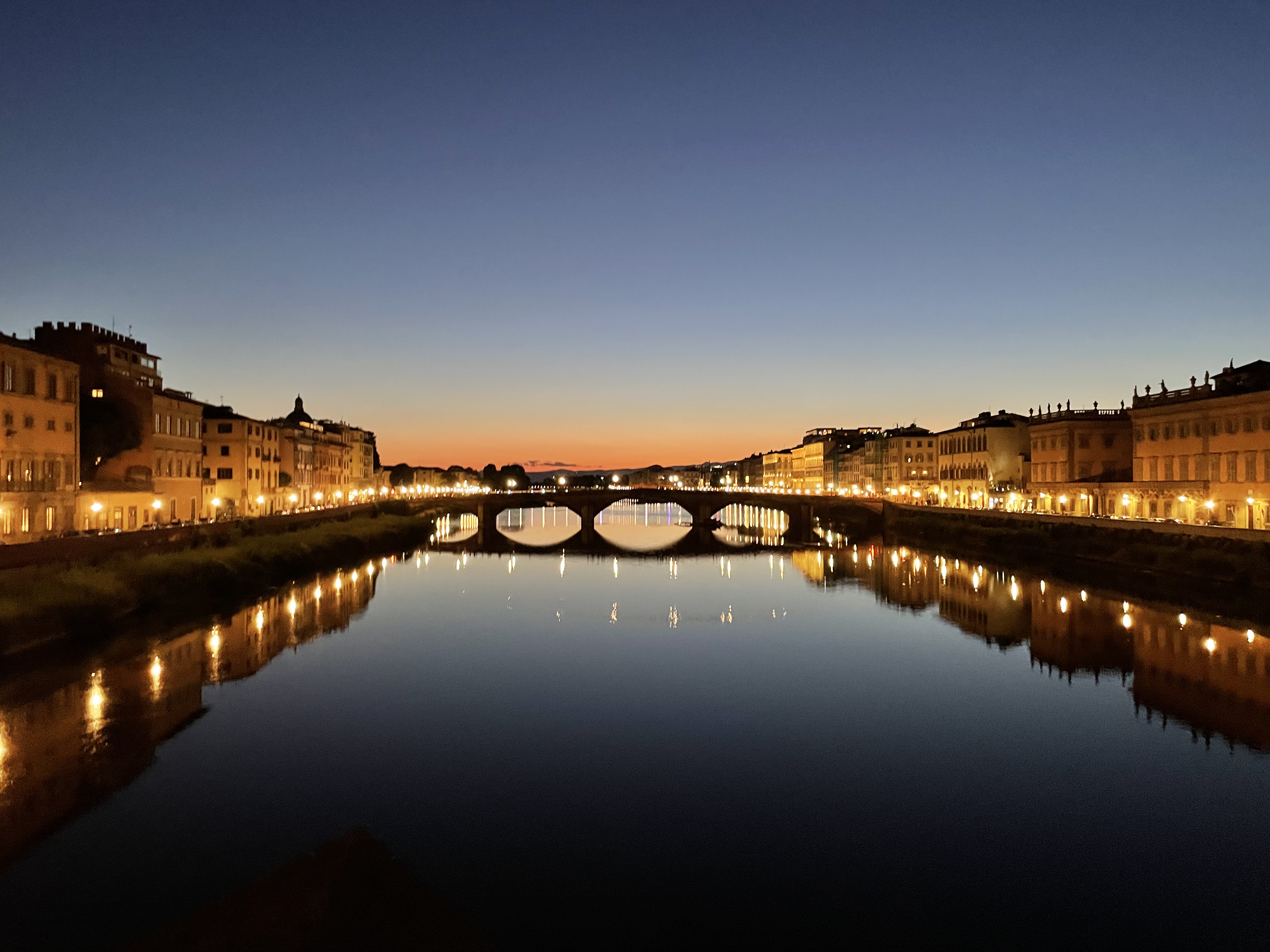
Photo by Jesica Siham Fernández of Ponte Vecchio over the Arno River in Florence, Italy
Author Biography
Jesica Siham Fernández, PhD is an associate professor in the Ethnic Studies Department at Santa Clara University (USA). As the recipient of the 2025 Schuman-Fulbright Fellowship, Jesica pursued archival research at the European University Institute (EUI) on youth sociopolitical development in the Young European Federalist (YEF) movement. Trained as a social-community psychologist, her scholarship is grounded in a decolonial praxis of critical reflexivity, testimonio and community engaged research. Jesica is the co-editor on the Handbook of Decolonial Community Psychology (Springer, 2024), and author of the award winning book Growing Up Latinx: Coming of Age in a Time of Contested Citizenship (New York University Press).
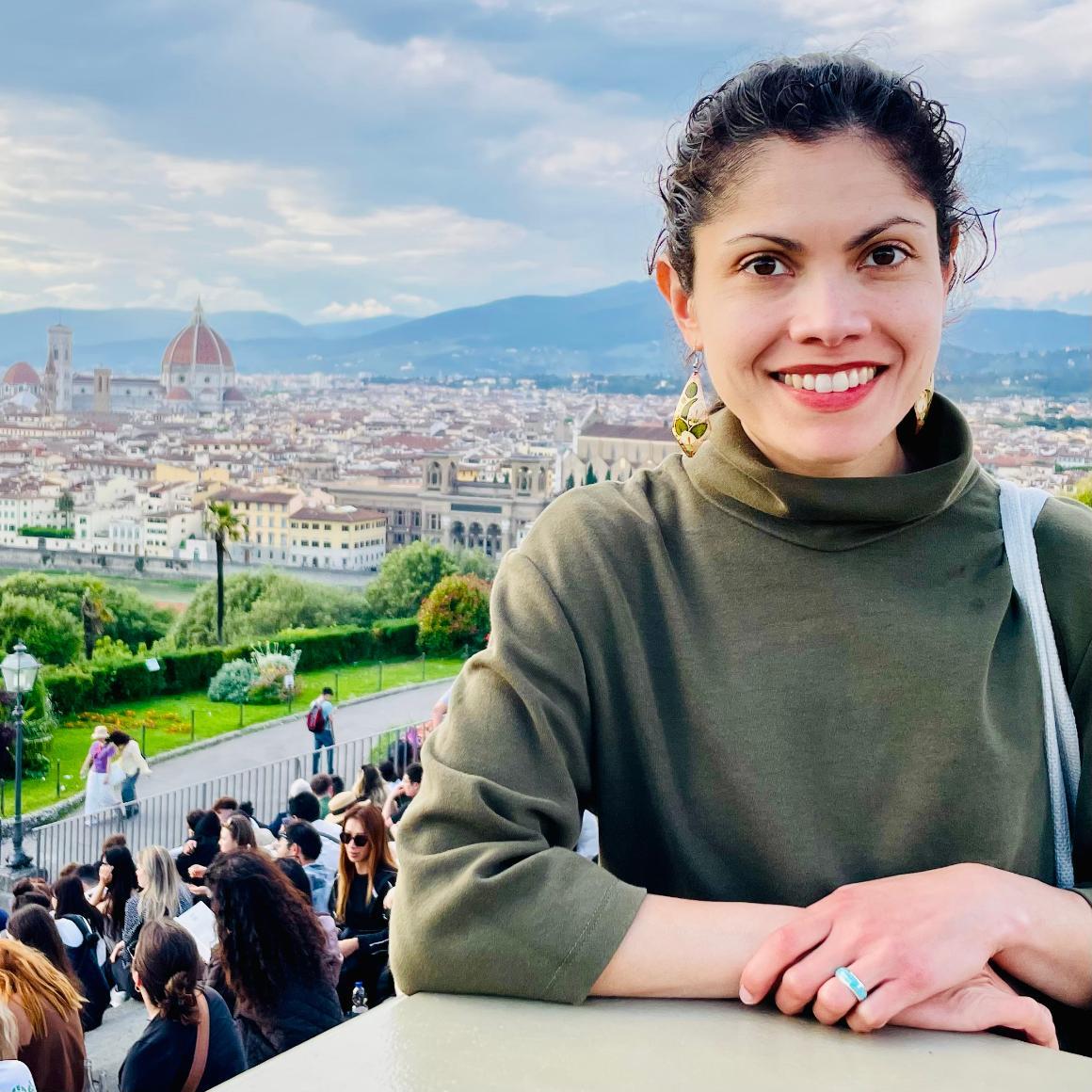
Photo of Jesica Siham Fernández at Piazzale de Michelangelo, Florence, Italy