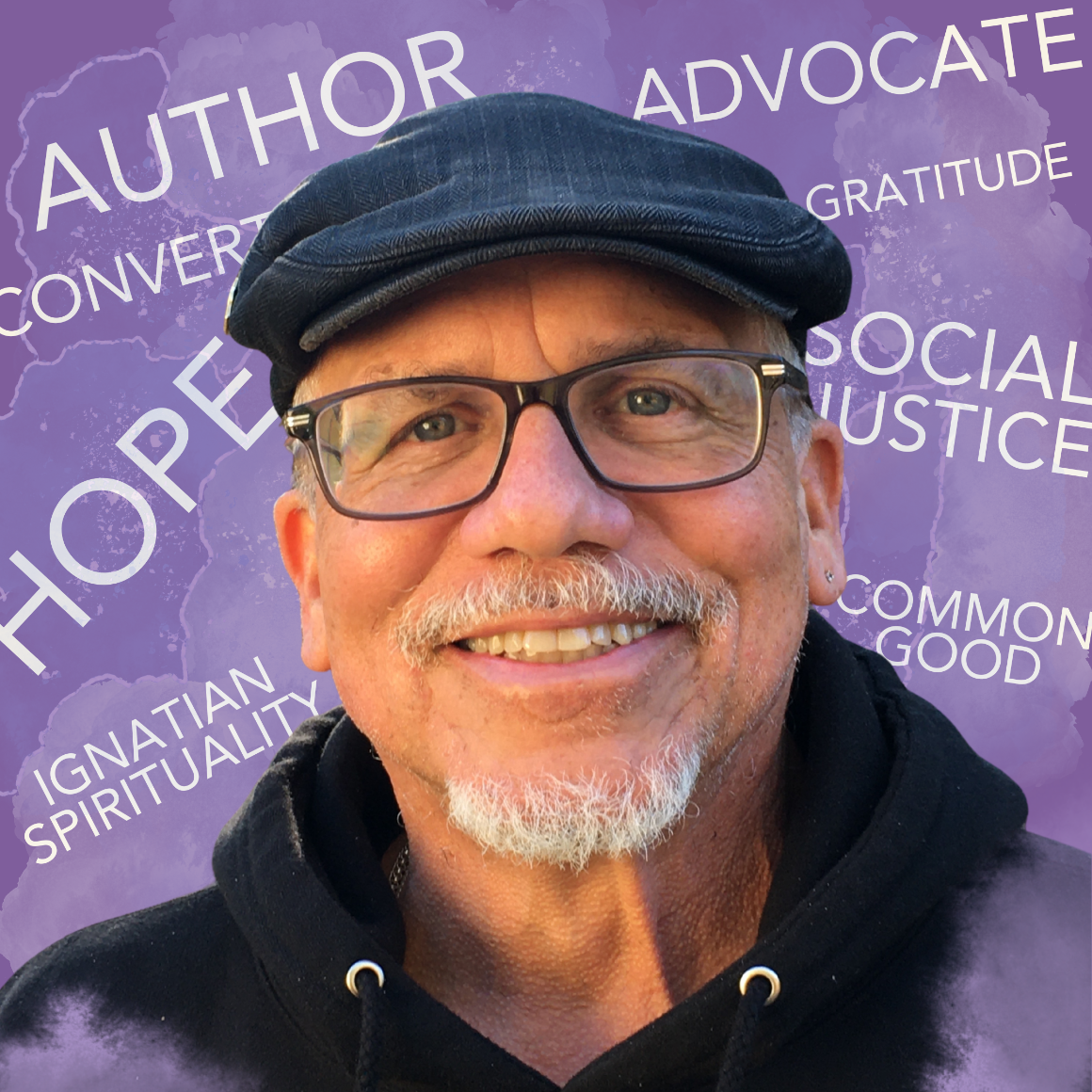
From Conversion to Common Good: Daryl Grigsby's Journey of Faith and Justice
For Daryl Grigsby, a journey of profound faith and a deep commitment to justice has been a hallmark of his life, a path illuminated and strengthened by his time in the Renewal Program at the Jesuit School of Theology of Santa Clara University (JST-SCU). A convert to Catholicism 25 years ago, Grigsby's spiritual awakening has consistently led him to explore how faith informs action, particularly in the realm of Catholic social teaching. His life's work, including his recent book, Catholics for the Common Good, embodies JST-SCU's vision of "becoming all God imagines."
Grigsby's conversion to Catholicism was a transformative experience, one he often speaks about with profound gratitude. He carries a daily reminder of this pivotal moment: a tattoo of the chalice and host on his left arm, symbolizing the Eucharist, which he describes as the wellspring of the Church's life and mission. As he reflects in an opinion piece for the National Catholic Reporter, "The Eucharist creates, sustains and enlivens the church. Imagine a church so transformed by the Eucharist that it is a light on a lamp stand, 'giving light to all in the house.' That church exists, often obscured by our own shortcomings. Yet, in ways we do not fully grasp, all over the world, Catholics are 'doing greater works' than Jesus (John 14:12), as the pilgrim people of God." This vision of a vibrant, active, and impactful Church has been a driving force for Grigsby, leading him to delve deeper into the theological foundations of Catholic social teaching.
Grigsby's passion for integrating faith and justice found fertile ground in the Jesuit School of Theology’s Renewal Program. He emphasizes how JST-SCU’s pedagogical approach, rootedness in Ignatian spirituality, and community deepened his understanding of how the Gospel calls believers to actively work for a more just and compassionate world. For Grigsby, the Renewal Program experience was “transformative not only because of the audited classes, the weekly presentations, and spiritual direction - but also because of the priests, religious and laypersons who brought their full humanity and faith commitment to the program.” The intersection of faith and public life, a core tenet of Jesuit education, resonated deeply with him, further equipping him to translate complex theological concepts into tangible advocacy and service.
His most recent book, Catholics for the Common Good, is an outgrowth of this commitment. In it, Grigsby highlights 36 figures, both well-known and unsung, who have exemplified Catholic social teaching in their lives and work. When asked about individuals in his book that readers might be unfamiliar with but should know, he points to Sister M. Martin de Porres (Patricia Muriel Rita Francis) Grey, who lived in the 1960s and was part of the order, Religious Sisters of Mercy in Pittsburgh. As an African American nun, Sr. Grey’s experience of racism discrimination led her to create space for other black Catholic religious sisters. After the murder of Dr. Martin Luther King Jr., she attended a Black Catholic Clergy Caucus meeting, but was excluded from voting because she was not a priest. At the gathering, Sr. Grey spoke out about the importance of including black Catholic priests and black Catholic religious sisters in dialogue with one another. After being rebuffed, she began to build a network that became the National Black Catholic Religious Conference, which was attended by 155 sisters for their first meeting in 1968. For Grigsby, Sr. Grey provides an example of persistence in spite of discouragement. Her courage embodied, according to Grigsby, embodies black Catholic faithfulness in the face of adversity.
Grigsby also notes that the struggle for civil rights and racial justice is intrinsically linked to the call for common good. He sees the work of figures like Sr. Grey as being integral to a broader understanding of Catholic history and its imperative for social transformation. His own work seeks to amplify these voices and connect them to contemporary issues, showing how the Church's teaching on justice and charity offers a robust framework for addressing societal challenges.
What gives Daryl Grigsby hope for the Catholic Church today, especially in a time of significant challenges? His hope stems from a deep conviction in the enduring power of the Eucharist and the witness of real people "doing greater works." He sees hope in the Church's capacity for renewal, for living more fully into its identity as a pilgrim people of God. His journey, from a profound conversion to a dedicated advocate for the common good, is a living testament to the transformative power of faith that empowers individuals to truly "become all God imagines."
To learn more about JST-SCU’s Renewal Program, please visit here.