AI and Negotiation: Learning to Work with Technology Without Losing the Human Element
Zorawar Almeida, Exchange Student, Spring 2026
The Conflict Resolution Program at the Santa Clara University School of Law recently hosted AI and Negotiation: The New Frontier of Dispute Resolution, a joint event with Stanford Law School. The panel brought together students, faculty, and practitioners to examine how artificial intelligence is reshaping negotiation, mediation, and legal training. The speakers included Dr. Megan Ma, Executive Director of Stanford’s Legal Innovation through Frontier Technology Lab, Professor Sarah Cole from The Ohio State University, and Colin Rule, President and CEO of ODR.com. Each speaker approached the topic from a different angle, but all focused on the same question: how should lawyers use AI without losing the human skills that make dispute resolution work?
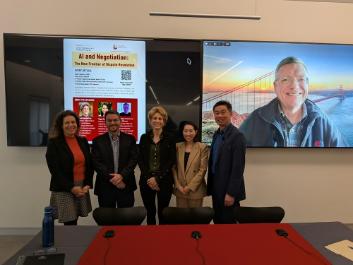
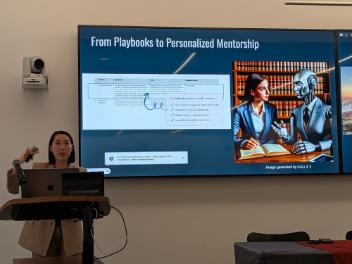
The panel explored how AI already affects legal education and practice. Dr. Ma described how her lab uses simulations and “AI personas” to help students and junior lawyers practice depositions, negotiations, and cross-examinations. These tools allow you to test strategies, make mistakes, and learn in a low-pressure setting. Professor Cole shared that mediators primarily use AI for preparation. Many use it to summarise briefs, learn unfamiliar law, and draft settlement agreements. Few rely on it during live mediation, where emotional awareness and judgment matter most. Colin Rule placed these developments in a broader context. He described AI as a “fourth party” in dispute resolution, alongside the two disputing parties and the human neutral. Technology already manages intake, scheduling, and documents. AI now extends that role into research, drafting, and even negotiation support.
At the same time, the speakers emphasized the risks of overreliance. Professor Cole described “cognitive offloading,” where professionals stop thinking deeply because technology does the work for them. When you rely too much on summaries and automated suggestions, you lose your ability to evaluate information on your own. The panel also discussed automation bias. People often assume that machine-generated answers are correct simply because they look polished. This creates real danger in mediation and negotiation, where judgment and context matter. The speakers also raised concerns about confidentiality, data use, and bias. Dispute resolution depends on trust. If parties believe that technology compromises privacy or neutrality, the entire process suffers.
This tension between efficiency and humanity ran through the entire discussion. AI saves time. It processes large amounts of information quickly. It helps lawyers prepare more thoroughly. It expands access to dispute resolution in low-value cases where human services remain unaffordable. At the same time, mediation and negotiation depend on skills that no system can automate. You need to listen carefully. You need to read tone and body language. You need to build rapport. You need to exercise moral authority when parties reach an impasse. These skills do not come from data. They come from experience and attention.
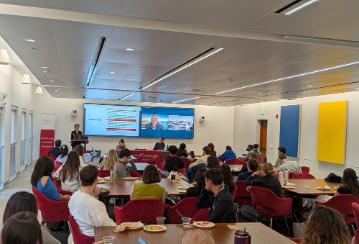
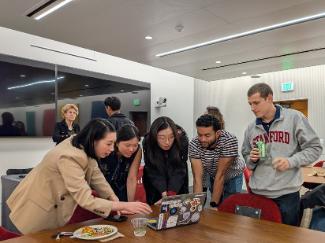
As a law student preparing for practice in an AI-supported profession, I found this balance especially important. You will use AI tools. You already do. You will draft faster, research more efficiently, and test strategies through simulations. These tools help you learn. They also tempt you to stop thinking independently. The panel made clear that responsible use requires discipline. You should treat AI as a practice partner, not as a decision-maker. Use it to prepare. Use it to check blind spots. Do not let it replace your analysis. In negotiation classes, internships, and future practice, your value will come from how you interpret information, not how quickly you generate it.
Colin Rule offered an analogy that clearly captured this idea. He asked whether a submarine is good at swimming. He then asked whether an Olympic swimmer like Michael Phelps is a bad submarine. The answer to both questions is no. Each excels at different tasks. AI works like a submarine. It handles depth, speed, and scale. Lawyers work like swimmers. We rely on judgment, flexibility, and human connection. One cannot replace the other. The future of dispute resolution does not involve choosing between them. It requires learning how to use both.
This event reinforced a simple lesson. AI is not a lawyer. A lawyer is not AI. The profession now demands that you learn to navigate technology without surrendering responsibility. If you want to practice effectively, you must develop both technical competence and human judgment. You must know how to swim. You must also learn how to navigate the submarine. Only then can you serve clients, resolve disputes, and preserve trust in an increasingly digital legal system.
Author:
 |
Zorawar Almeida
|
Our Team Experience at the ABA Mediation Competition
Gabriella Pacula, JD '27, Jan 24, 2026
I am incredibly grateful to have had the opportunity to participate in the ABA Mediation Competition and for the time, care, and mentorship that went into my partner's and my preparation. The coaches were phenomenal, and I learned so much from everyone who contributed to the process, including the Honors Moot Court External (HMCE) Board members, Victoria Brea, JD '26, and Amanda Mitchell, JD '26, the professors, Prof. Gary Spitko and Prof. Melody Sequoia, Conflict Resolution Program Director, Leor Chechik, and past competitor Tim Zunich, JD '19, who generously shared their insight and experience.
The team-selection process began with an application explaining our interest in mediation and any prior experience, though no specific prior experience was required. The application was followed by a tryout where we participated in a 15-minute mock mediation based on a mini-scenario. During the tryout, Leor Chechik played the role of the mediator, while a member of the HMCE Board served as the client and judge, making the exercise both challenging and realistic.
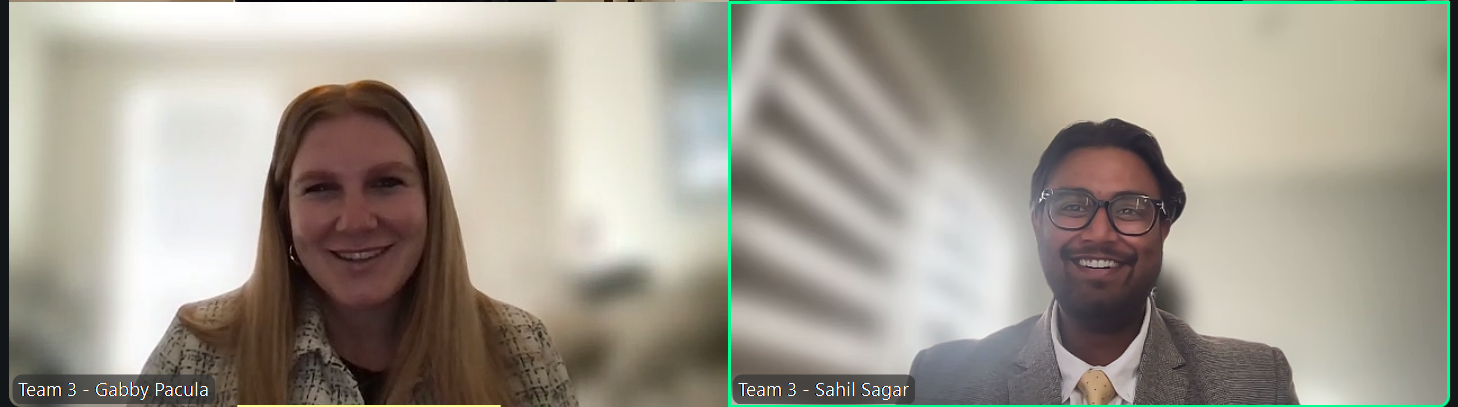
One of the most rewarding parts of the competition was collaborating with my partner, Sahil Sagar, JD '26, and bouncing ideas off one another as we worked to creatively and thoughtfully represent our client's interests. The competition itself was especially engaging because it required us to think on our feed and maintain a strong command of both the law and facts in order to respond effectively to the other side's concerns, defenses, offers, and counteroffers in real time.
On the day of the competition, it was especially meaningful to work with real-life mediators and receive direct feedback on which strategies were effective and where alternative approaches could have better advanced our client's interests. It was also exciting to compete against other law students and observe the different strategies they employed. Overall, the experience was not only extremely fun, but it pushed me to grow as an advocate and sharpened skills that I know will translate directly into practice.
Author:
 |
Gabriella Pacula
|
My Key Takeaways on Mediation Ethics
Sahil Sagar, JD '26, Sept 30, 2025
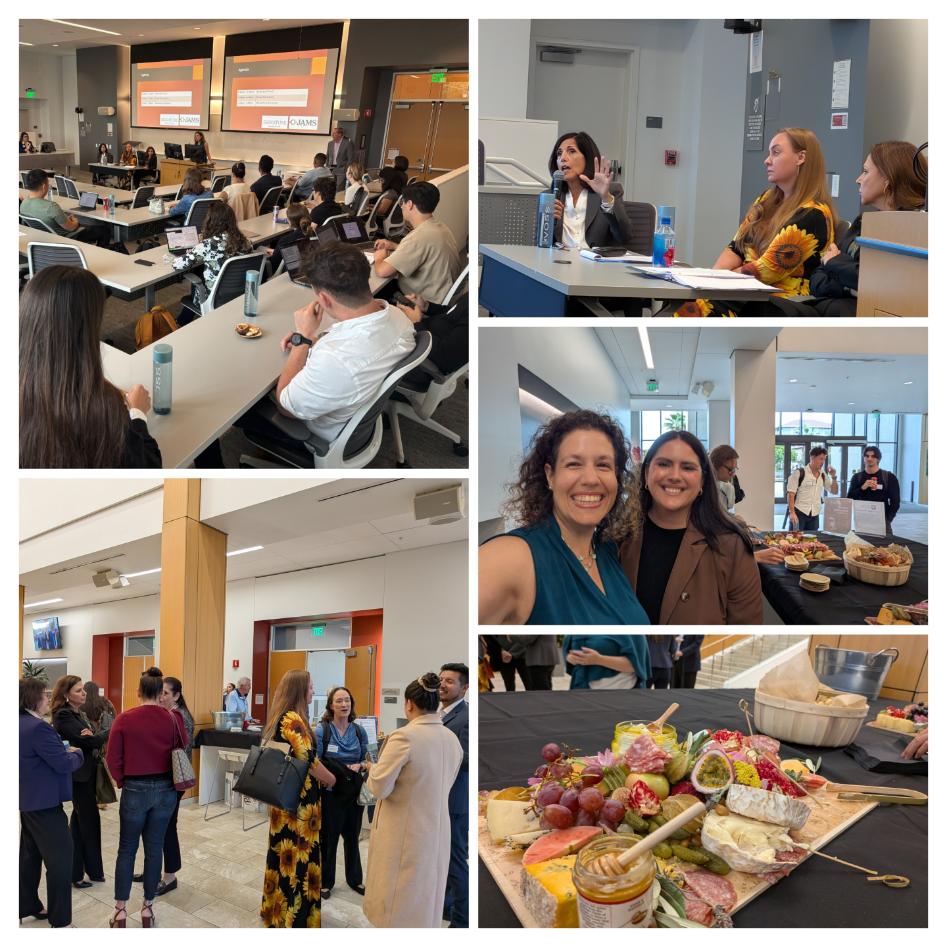
The Conflict Resolution Program hosted a Mediation Ethics panel attended by 42 law students, attorneys, and conflict resolution professionals from the Bay Area. The panel included four prominent figures: Adriana Moore, a civil litigation attorney and mediator with 25 years experience; Laurie Mikkelsen, ADR Administrator for the Santa Clara County Superior Court; Tamara Lopez, veteran government litigator and mediator at JAMS; and Hon. Peter H. Kirwan, retired Superior Court Judge and long-time mediation professor at SCU Law. Hosted by Leor Chechik, the session and subsequent mixer highlighted best practices and practical dilemmas in mediation ethics.
Takeaways
Adriana Moore described transitioning from litigation to mediation after noticing her natural tendency to bring parties together and resolve disputes. Moore emphasized a mediator’s duty to serve as a reality check, leveraging subject-matter expertise to help parties assess the feasibility of proposed solutions. She shared that “when in doubt, ask a question rather than offering advice” - ensuring neutrality and maintaining trust.
Laurie Mikkelsen discussed her journey from psychology and environmental law to mediation and ADR administration. Mikkelsen highlighted that mediators must create an environment where participants feel respected and heard, regardless of the outcome. She stressed the importance of procedural satisfaction - ensuring that every step in the mediation process is fair, which often determines whether participants leave feeling content. Her work administering a diverse range of civil and probate ADR programs reinforced how emotional intelligence and active listening are indispensable tools.
Tamara Lopez recounted her experience as both a probate litigator and a mediator. Lopez pointed out how easily mediators can cross the line into inadvertent legal advice, and advocated for using strategic questions to guide discussion. She described how co-mediating offers a dynamic way to balance perspectives and empower parties’ informed self-determination, all while rigorously protecting confidentiality through private caucusing.
Judge Kirwan provided insights from nearly two decades on the bench and as a mediation instructor. He stressed that impartiality is the cornerstone of mediator conduct and recounted cases where stepping aside at the slightest hint of impropriety was necessary to preserve trust in the process. Kirwan illustrated how judges moving into mediation must remain vigilant against bringing courtroom habits, such as steering parties, into mediation settings, where party-led self-determination should prevail.
Personal Reflection
This event challenged and expanded my assumptions about what it means to be an effective mediator. The speakers’ experiences revealed that success in mediation hinges more on transparency, careful disclosure of potential conflicts, and on managing the process so everyone is genuinely included. The recommendation to “disclose, disclose, disclose,” even when in doubt, was especially memorable for its simplicity and importance.
I learned that mediators must avoid offering legal advice, and instead help participants reach their own conclusions through well-timed questions. This technique stands out as a valuable lesson for both legal classroom scenarios and future practice, fostering client empowerment and reducing risk.
Networking during the reception was another highlight—engaging conversations with seasoned practitioners and reconnecting with Professor Mikkelsen deepened my understanding of the mediation community’s collaborative spirit. These interactions gave me confidence about pursuing mediation work, and provided connections that may prove helpful in both future coursework and professional endeavors.
Author:
 |
Sahil Sagar
|