2026
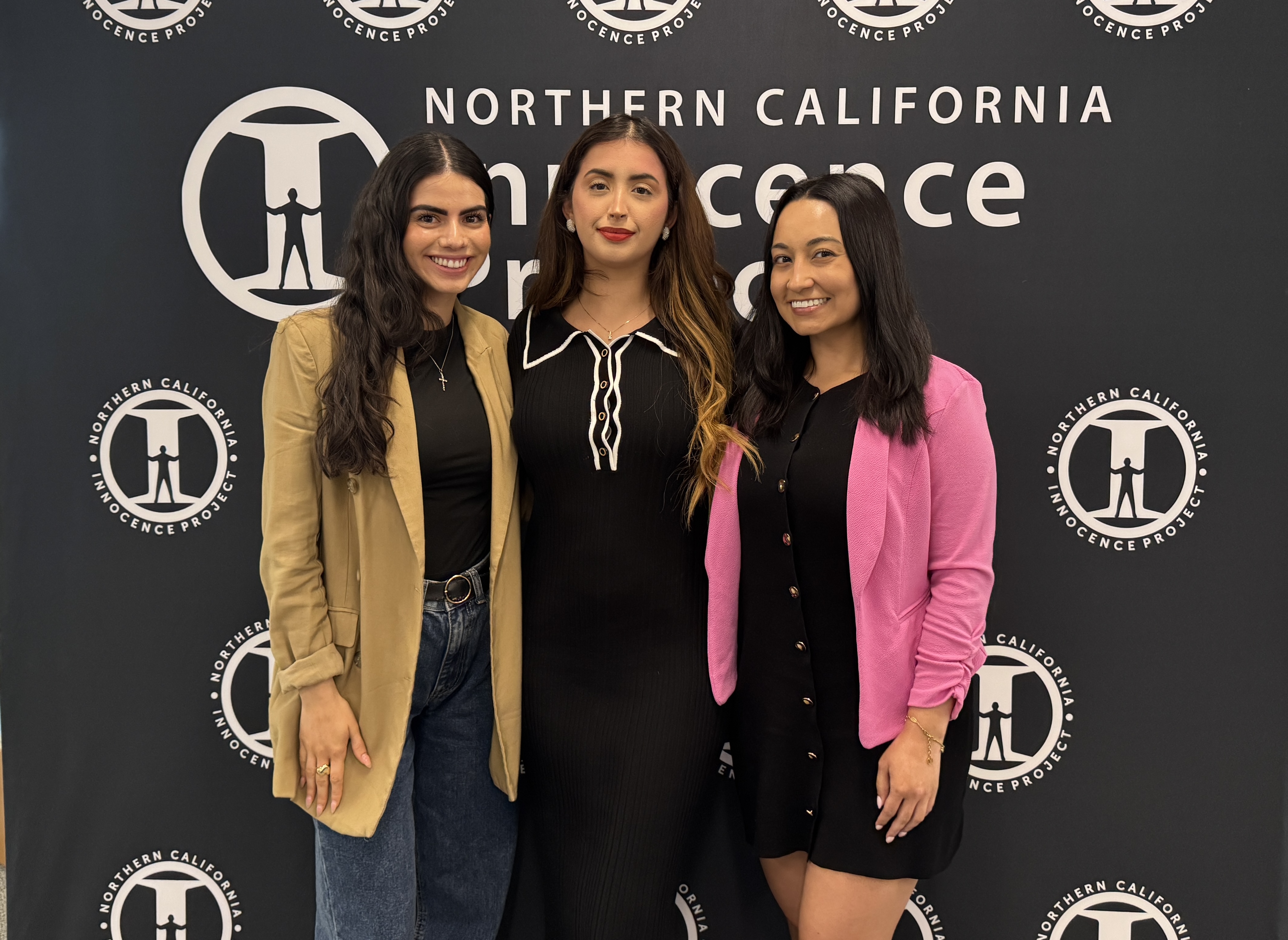
The justice system is failing the innocent. Three NCIP students propose bold solutions to fix the status quo.
The American criminal legal system is often compromised by systemic gaps in equity, transparency, accessibility, and resources. The Northern California Innocence Project (NCIP) at Santa Clara Law educates and equips students to help combat these challenges. As one of their clinic projects, NCIP students presented potential reforms to advisors which aimed at addressing the root causes of wrongful conviction from a policy standpoint. Hear from three of our students: Julia Sandoval, Cassandra Armenta, and Rianna Surdam.

Julia Sandoval (3L)
In her presentation, Julia Sandoval (3L) outlined how wrongful convictions can stem from errors in proper documentation at the investigative level. When the jury, and later appellate attorneys and courts review a case, they see an evidentiary narrative that has been shaped behind-the-scenes by investigative decisions, many of which may be missing from official records.
The current law requires the disclosure of material exculpatory evidence, but this only applies to evidence that was actually preserved. Critical decisions that were never recorded in the first place fall out of scope. To prevent harm and produce reliable outcomes, explained Sandoval, more thorough documentation in investigations is needed.
Sandoval’s policy proposal “establishes a documentation requirement, defines key terms, explains implementation steps, and remedies for violations,” bridging the gap between existing disclosure requirements and the reality of undocumented investigative pivots. The new documentation requirements would especially bring to light reasons police decline to pursue leads on suspects. Critically, the proposed documentation requirement would not create additional burden on police forces, but rather formalize and standardize decisions already being made. Sandoval's policy would reduce the rates of investigative errors, and thus, reduce wrongful convictions.

Cassandra Armenta (3L)
The next proposal was presented by Cassandra Armenta (3L). Her policy policy proposal focused on the high risk of misunderstanding, coercion, and unreliable confessions in custodial interrogations of individuals with limited English proficiency (LEP). She opened with the story of Karla Baday, asking the audience to imagine being read their Miranda rights in a language that they didn't understand.
Karla Baday's story is an example of how linguistic barriers can lead to profound injustice. Despite having no English proficiency, she was read her Miranda rights in English and interrogated without an interpreter—while being mocked by law enforcement. Even when an interpreter was eventually provided, the translation was incomplete, leaving her without a meaningful understanding of her rights or the accusations against her. Baday ended up being wrongfully incarcerated for 17 years. It was only after Baday taught herself to read and write in English while in prison that she was able to contact the NCIP to seek the help that ultimately led to her freedom.
Armenta further noted some key statistics, including that approximately 7 million US residents speak English “less than very well” and 12-25% of wrongful convictions involve false confessions. The Department of Justice believes that custodial interrogations involving LEP individuals should employ qualified interpreters; however, this does not happen often.
To remedy this, Armenta proposes a policy that requires CA legislation to certify independent interpreters not affiliated with investigative law enforcement or investigative agencies, coupled with audio and visual recordings. Her “California Custodial Interpretation Service” (CCIS) proposal establishes a framework for linguistic justice and procedural accuracy. There would be dedicated support for LEP individuals to mitigate the high risk of misunderstanding and coerced confessions. Further, it would ensure neutrality with the interpreters being independent contractors. Because agencies would likely not be able to have interpreters on-site 24/7, she suggested a hybrid model as a solution, allowing clients to call interpreters as needed.

Rianna Surdam (3L)
Rianna Surdam (3L) wrapped up the presentations, addressing the consequences of an overburdened public defense system, including the inevitable jeopardizing of indigent clients’ constitutional rights and the integrity of the criminal legal system overall. An overburdened system leads to overloaded attorneys who simply cannot give appropriate time and attention to each client. Although standards set by the National Advisory Commission on Criminal Justice Standards and Goals (NAC) established a maximum number of cases an attorney should handle, they were set over 50 years ago. Now, indigent defense attorneys are forced to juggle caseloads much greater than this maximum, leading to issues that may result in wrongful convictions.
To remedy this problem, Surdam proposed creating a rebuttable presumption of Ineffective Assistance of Counsel (IAC) when an appointed counsel’s caseload exceeds national standards of case load. She explained, “The state would rebut this by proving an inverse Strickland analysis: (i) counsel's performance was reasonable and (ii) counsel's performance did not prejudice the defendant.” Then, the court would apply a balancing test weighing the standards from the National Public Defense Workload Study (NPDWS) against the evidence the State presented. Surdam acknowledged potential pushback concerning the complexity of the burden and wasted resources, but countered with the reality that the current system inflicts lasting trauma, makes incarceration very expensive, and can be very unreliable.
The proposals by Julia Sandoval, Cassandra Armenta, and Rianna Surdam not only introduce policy changes to address systemic gaps in the legal system that can lead to wrongful convictions, but also demonstrate how students can connect classroom theory and real world impact. This is at the core of the transformative experience students partake in through the NCIP and Santa Clara Law.
Rianna Surdam, Julia Sandoval, Cassandra Armenta