OVERVIEW:
The people who work at your business have a big impact on your ability to be successful. Employee issues and management problems can reduce your profitability, but good employees and great management practices can help create customer loyalty, higher sales, and more money for your business. In this session, we’ll discuss how employees impact your business, how to help your employees be successful, the basics of managing and motivating your staff, how to handle difficult situations, and how you can use employee feedback to continuously improve your business. You will learn the steps to create a thorough and successful onboarding process for new hires along with guidance for creating an employee handbook.
- The Foundation: Understanding Employees and the Workplace
- How Employees Impact Your Bottom Line
- Workplace Culture
- Employee Lifecycle and Experience
- Your Business, Your Employees, and Your Community
- Setting Employees Up for Success
- Creating an Employee Handbook
- Clear Expectations and SMART Goals
- Onboarding and Training
- Legally Required Accommodations and Safety
- Managing Basics
- Why Employees Don’t Do What They’re Supposed to Do
- Giving Feedback (Positive and Constructive)
- Difficult Situations and Performance Issues
- Keeping Employees Engaged and Motivated
- Top 10 Do’s and Don’ts
Watch this session in Video Format (35:18)
The Foundation: Understanding Employees and the Workplace
How Employees Impact Your Bottom Line
Employees have a direct impact on your bottom line. The term “satisfaction mirror” explains this concept - when your employees experience satisfaction in their job, they have a positive effect on the customers and the customer experience. When the customers are more satisfied, the employees are more satisfied, and the loop continues. In short, happy employees help your business thrive.
Workplace Culture
One of the things with the biggest impact on your employees is your workplace culture. The culture of your business refers to the overall feeling of your business and what it’s like to work there. One way to start to define your workplace culture is to think about your core values. What are five to seven values or priorities in your business? Some of these concepts might apply to most businesses, like quality service, customer satisfaction, and honesty. As you keep thinking about it, you’ll find words that describe your approach. Is it fast-paced or relaxed? Is it competitive or collaborative? Do you prioritize speed or accuracy? Below is a list of core values.
Which of these would you use to describe your business, and are there others you’d like to include?
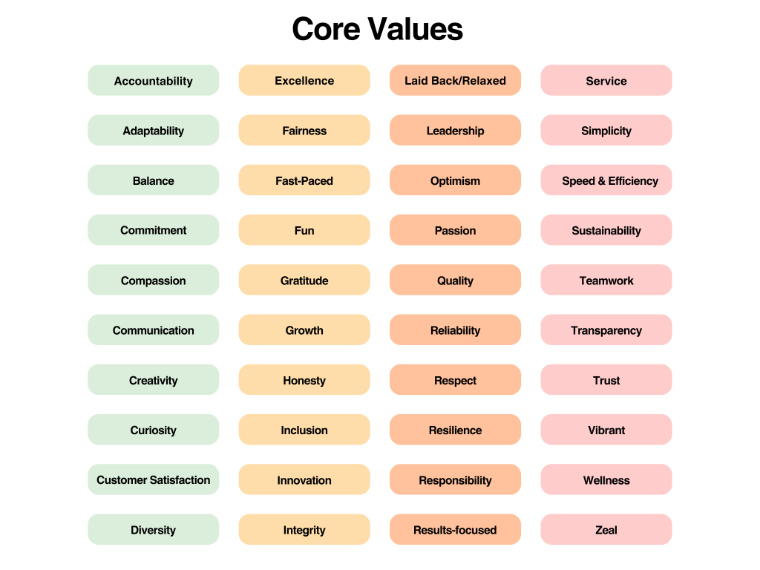
Identifying your values will help you determine how you interact with your employees and what kind of leader you want to be, along with clarifying how you want your business to function. Being consistent with your culture shows employees what to expect and how to do well at work.
Employee Lifecycle and Experience
The “employee lifecycle” refers to different stages of the employee experience. The goal is to bring in great people who are the right fit, make sure they have the knowledge and training to be successful, and retain them to help your business thrive.
Here are the stages of the typical employee lifecycle, represented in the graphic shown.
Hiring -> Onboard -> Develop and Grow -> Retain -> Exit
First, they are hired. Building a team of good employees starts with finding the right fit. See the Hiring and Firing session for a step-by-step guide to identifying and hiring the right people.
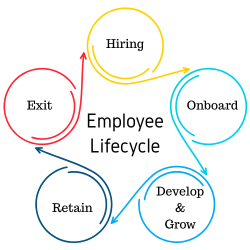
Once you get good people in the door, you’ll want to set them up for success. Retaining great employees is one of the best ways to help your business run smoothly.
Another key consideration is how your business approaches including and reflecting your community. Building a team that’s inclusive and representative of your community and customers can help make your business stronger and help you better serve your target audience. In other words, there are business advantages to making sure your staff is similar to your customer base.
Setting Employees Up for Success
Creating an Employee Handbook
Imagine you’re a new employee at a business. Some of your first questions will likely be “What do I do?” and “How do I do it?” To address these questions and many others, you’ll want to have an employee handbook. You can think of this document as the main source for all questions about employment, ranging from time off and dress codes to safety guidelines and compensation schedules. While some can be very long and full of policies, you can also start very simply just by listing what an employee can expect while they work for you. Below is a high-level list of things to include in your employee handbook. You can also download MOBI's free Employee Handbook Template (PDF) to help you get started. Here are some basics:
- Welcome Message – A short note about the business and its values.
- Job Expectations – What employees need to do and how to do it well.
- Work Hours and Attendance – When to work, breaks, and what to do if running late.
- Where and How to Work – Whether working from home is allowed and what rules apply.
- Pay and Benefits – How and when employees get paid, plus any perks.
- Time Off and Holidays – Rules for sick days, vacations, and holidays.
- Workplace Rules – Basic do’s and don’ts to keep things running smoothly.
- Dress Code – What employees should wear at work.
- Respect and Behavior – Rules for treating everyone fairly and being professional.
- Safety and Emergencies – How to stay safe and what to do in an emergency.
- Using Work Equipment – How to handle tools, computers, or other property of the business.
- Social Media and Internet Use – Rules for online activity at work.
- Problem Solving – How to handle conflicts or concerns.
- Leaving the Job – What happens when an employee quits or is let go.
Clear Expectations and SMART Goals
Next, you’ll need to clearly explain what is expected of each employee. Having clear expectations at the beginning helps the employee understand the specifics of their job so they can be successful. It also helps you know how you will measure their success. Many managers use SMART goals to set clear expectations with employees. SMART goals are Specific, Measurable, Achievable, Related (to your business goals), and Time-bound. These goals are often thought of as Key Performance Indicators (KPIs) or success metrics that provide information about an employee’s job performance.
For example, if you own a lawn care business, you might have a SMART goal that employees should cut five lawns per day. If your employee cut five lawns in all five days of their schedule, the KPI would be 100%. If your employee cut five lawns four out of five days, their KPI would be 80%.
For a bakery, you may have a SMART goal that employees come to work on time and stick to their designated break times. You could similarly measure their performance in meeting this goal.
There are numerous ways to set goals for your employees. What are the three to five things that your employees need to do to be successful? How will you know if they are accomplishing these goals?
Onboarding and Training
Onboarding is the process of bringing a new employee into your business and making sure they have all of the information, skills, and tools to be successful. Often, an employee will be assigned a buddy or a mentor to help them learn the job. In many small businesses, that is often the owner. Be thorough when you design your onboarding process. Carefully consider all the training a new worker might need. Remember, employees can’t read your mind and don’t have your background or experience. In addition, you’ll want to build an onboarding checklist that helps both you and the employee understand what’s needed to be successful at the job. Here is a sample onboarding checklist:
Before the First Day:
- Send a welcome email with start date, time, and what to bring.
- Prepare the workspace (desk, computer, tools, etc.).
- Set up email, software, and accounts.
- Assign a mentor or point of contact.
First Day:
- Give a warm welcome and office tour.
- Introduce team members.
- Review the employee handbook and policies.
- Go over job expectations and daily tasks.
- Set up payroll, benefits, and any paperwork.
- Explain who their supervisor is.
First Week:
- Provide basic training on tools, software, and equipment.
- Shadow an experienced employee if needed.
- Check in regularly to answer questions.
- Set short-term goals and expectations.
First Month:
- Give feedback on performance and progress.
- Ask for feedback on the onboarding process.
- Offer additional training if needed.
- Help the employee feel part of the team.
Legally Required Accommodations and Safety
In addition, you’ll want to familiarize yourself with the Americans with Disabilities Act (ADA) to make sure you can make reasonable accommodations for any employees with disabilities. Are there other accommodations you would like to offer your employees?
For example, you might provide employees the option to have flexible work hours or telecommute. You might create an accessible workspace with wheelchair ramps, accessible parking spaces, or ergonomic furniture and training. You might offer assistive technologies such as screen readers, magnifiers, or ergonomic keyboards, or you might modify job duties to suit an employee’s abilities.
It’s also your responsibility to ensure that you are providing a safe work environment in compliance with the Occupational Safety and Health Administration (OSHA) guidance.
Managing Basics
Leadership: How to Manage Employees Effectively
Good management helps employees feel valued, motivated, and productive. It’s important to:
- Set clear expectations about job duties and performance.
- Treat everyone fairly and with respect.
- Give employees the tools, training, and support they need.
- Check in regularly to offer guidance and feedback.
- Lead by example—your behavior sets the tone for the workplace.
Different leadership styles affect how employees work and feel. The right approach depends on the situation and team:
- Authoritarian (Top-Down) – Makes all decisions and expects employees to follow orders. This style can work in emergencies but may lower motivation over time.
- Coaching – Focuses on helping employees learn and improve. Encourages questions and skill-building.
- Servant Leadership – Puts employees first, removing obstacles and supporting their growth. This can create a positive and motivated work environment.
- Democratic (Collaborative) – Involves employees in decision-making, which helps them feel valued and engaged.
A mix of styles is often best, depending on the needs of the business and employees. To learn more about how to lead, visit MOBI’s Small Business Leadership session.
Regular Check-Ins and Performance Conversations
Frequent conversations help employees stay on track and feel supported. These don’t have to be formal—just a quick chat can be enough. Ask:
- How is your work going?
- Do you have any challenges or roadblocks?
- What support do you need to do your best?
- What ideas do you have for improving our work?
Being available and approachable helps employees feel comfortable coming to you with concerns.
Power Dynamics and Personal Favors
As a manager, it’s important to avoid favoritism or expecting employees to do personal favors (like running errands). This can create tension and unfairness in the workplace. In addition, you’re in a position of power over your employees. You determine their schedules, their compensation, and other important things related to their life at work. When you ask an employee for a “favor” it’s an unfair dynamic because they aren’t in a position to say no. Treat all employees with respect and focus on professional relationships.
Communication Strategies
Good communication makes a workplace run smoothly. Some key strategies:
- Be clear and direct. Avoid vague instructions—explain exactly what needs to be done.
- Listen actively. Pay attention to employees’ concerns and ideas.
- Ask questions. Make sure employees understand expectations.
- Encourage open discussion. Let employees share thoughts without fear of judgment.
- Ask for suggestions. Your employees can have great insight into your business and ideas to improve. Ask them for suggestions and provide ways for them to be part of your business's success.
A workplace where employees feel heard and valued leads to better teamwork and productivity.
Psychological Safety
Employees should feel comfortable speaking up, asking for help, or admitting mistakes without fear of being embarrassed or punished. To build this type of work environment:
- Respond to mistakes with patience and problem-solving, not anger.
- Encourage employees to share ideas and opinions.
- Support learning and improvement rather than blame.
When employees feel safe, they’re more engaged and willing to take initiative.
Applying Treatment Fairly and Consistently
Rules and policies should be applied equally to all employees. Inconsistent treatment can cause frustration and hurt morale.
- Avoid giving one person special treatment.
- If exceptions must be made, explain why.
- Be transparent about expectations and consequences.
Fairness builds trust and loyalty among employees.
Team Dynamics and Collaboration
A small team works best when everyone understands their role and how they contribute. Encourage teamwork by:
- Assigning clear responsibilities.
- Encouraging employees to help each other.
- Creating a positive, supportive environment.
Even in a small business, teamwork is key to success.
Managing Teamwork
Sometimes employees need to work across different tasks or departments. Working across different departments or functional groups (such as marketing, finance, production, etc.) is often referred to as “cross functional” collaboration. Issues with cross functional teamwork can arise because each department or functional group may have its own objectives in addition to the business’s overall goals. This can sometimes cause confusion. Tips for managing teamwork across the business include:
- Making sure roles and expectations are clear.
- Setting deadlines and checking in regularly.
- Encouraging open communication to avoid confusion.
- Identifying priorities among different goals or objectives.
A well-organized team works more efficiently and avoids unnecessary stress.
Change Management
Change is difficult for everyone. When making changes, help your team understand and prepare for the change. If possible, try to get buy-in and input along the way so your team is part of the process. When you’re ready the implement the changes:
- Explain the reason for the change.
- Give employees time to adjust.
- Listen to concerns and answer questions.
- Provide training if needed.
Helping employees understand and accept change makes transitions smoother.
Why Employees Don’t Do What They’re Supposed to Do
Even good employees can struggle with performance. Here are common reasons why:
- Unsure what to do or how to do it. If instructions aren’t clear, employees may not know exactly what’s expected. Make sure to:
- Give detailed instructions when assigning tasks.
- Check that employees understand.
- Provide examples if needed.
- Missing tools, materials, or resources. Employees can’t work well if they don’t have what they need.
- Make sure supplies and equipment are available.
- Fix broken tools quickly.
- Keep software and technology up to date.
- Ask if there’s something additional they need to do their job.
- Difficult working conditions. Sometimes the work environment can disrupt your employees’ work. These could be things like:
- Distractions – Noise, interruptions, or overcrowded workspaces.
- Uncomfortable conditions – Too hot, too cold, or poor lighting.
Fixing these issues helps employees stay focused.
- Unclear priorities. Employees may struggle if they don’t know what to focus on first. For example, should they answer the phone or help a customer in person?
- Rank tasks by importance.
- Set clear expectations for handling multiple tasks.
- Lack of motivation. Employees work harder when they feel appreciated and connected to their work. Motivation can drop when they:
- Don’t see how their work helps the business.
- Feel unappreciated or overlooked.
- Are bored or unchallenged.
- Have outside factors in their personal life impacting their work.
Boost motivation by recognizing hard work, offering growth opportunities, and creating a positive work environment. However, some employees may lack motivation despite your best efforts. In that case, it may be time for a direct conversation about their performance.
- Don’t see the impact of their work. Employees want to know their work matters. Help them see their impact by:
- Showing how their tasks contribute to the business’s success.
- Thanking them for their contributions.
- Sharing customer feedback or success stories.
- Not knowing who or how to ask for help. Employees should always feel comfortable asking for help. To ensure this:
- Assign a point of contact for questions.
- Make sure employees know they won’t be judged for asking.
- Encourage teamwork and problem-solving.
Giving Feedback (Positive and Constructive)
An important part of managing and motivating employees is giving feedback, both positive and constructive feedback. Providing employee feedback may seem like an obvious action when there are problems, but it is equally essential when your business is running smoothly. Here we will discuss tips for communicating your feedback to employees as well as key reasons for providing feedback.
- Clear, specific, and actionable feedback. Feedback should help employees improve or reinforce good behavior. Instead of saying, “You need to do better,” try:
- Specific: “You missed the deadline on the report. Let’s find a way to manage your workload better.”
- Actionable: “Next time, check in with me if you’re running behind so we can adjust.”
- Positive feedback. Employees need to feel appreciated. Recognize good work both privately and in front of others.
- Public praise boosts confidence and morale.
- Private recognition can feel more personal and meaningful.
- Even small acknowledgments, like a simple “I appreciate your help” can go a long way.
- For both positive and constructive feedback , try to provide praise or feedback right away - close to the moment it happens if possible.
- Aim to be specific rather than generic. While a well-placed “Good job” can be useful, it’s more impactful to give specifics. It shows you put more thought into it and helps employees believe it’s genuine. For example, “I noticed that you’ve spent extra time this week helping new customers. I appreciate that because it means the customers are more likely to come back and you’re showing other employees how to excel at their jobs.”
- Constructive feedback. If an employee is having a performance issue, it’s important to address it quickly, clearly, and privately. Here are some tips to approach the conversation:
- Provide constructive feedback in private. No one wants to be criticized in front of others.
- Have the conversation quickly after the incident. Don’t wait for a performance review a month later to raise an issue.
- Stay calm and professional.
- Be respectful.
- Focus on the behavior, not the person.
- Offer solutions instead of just criticism.
- Be very specific. Identify the behavior and the time period. For example, instead of “You’ve had a bad attitude” try “I noticed that you’ve been abrupt with customers during the checkout process during your shifts this week.”
- Identify the issue, give the employee a chance to clarify, and explain next steps or consequences. Example: “I noticed you were late twice this week. Will you tell me more about what’s going on? Let’s talk about what’s causing the delay and find a solution.”
Difficult Situations and Performance Issues
Even with the best intentions, you will inevitably face conflict and challenging situations that require more consequences and corrections than you can provide in a single conversation. You’ll want to follow a “progressive discipline model” which should be covered in your employee handbook. The goal is not punishment, it is to help employees get back on track and correct any issues. As you’re providing this feedback, also include ways they can realistically improve.
Often it follows these steps:
- Verbal warning(s)
- Written warning(s)
- Performance improvement plan (PIP)
- A formal document that explains how an employee needs to improve, the time period for making these improvements, and what happens if they cannot meet the performance goals.
- Termination (firing an employee)
- As a last resort, it may be time for an employee to leave your business, which is often the best course of action for everyone involved. See the Hiring and Firing session for specific steps and guidance.
We’ve covered the basics of how to get an employee started at your business and manage their behavior. The goal is to go beyond managing the basics. It’s in your best interest to develop a team of people who are engaged and motivated in their jobs. We’ve discussed how to do a good job managing employees. Now we’ll talk about how to do a great job managing employees and how to build a workplace where your team will thrive.
Keeping Employees Engaged and Motivated
A happy, motivated team is the heart of a successful small business. When employees feel valued and supported, they work harder, stay longer, and contribute more to the business. Small businesses may not have big budgets for perks, but sometimes smaller businesses can be more flexible and creative with employee rewards. A positive work environment, fair treatment, and thoughtful leadership go a long way in keeping employees engaged.
Motivation Strategies
- Recognizing and rewarding employees. People like to know their work matters. Recognition doesn’t have to be expensive—sometimes a sincere “thank you” is enough. Consider ways to celebrate achievements, such as:
- A handwritten note or shoutout in a team meeting.
- A small bonus, gift card, or extra break.
- Team celebrations for milestones.
Consistency matters. If you only recognize one or two employees while overlooking others, it can hurt morale. Make recognition a regular part of your management style.
- Providing autonomy and ownership. Employees feel more engaged when they have control over their work. Avoid micromanaging—trust your team to take ownership of their tasks. Ways to foster autonomy include:
- Letting employees decide how to approach their work.
- Encouraging them to come up with solutions instead of just following instructions.
- Giving them responsibilities beyond their job descriptions to help them grow.
When employees feel responsible for their results, they take more pride in their work.
Retention Strategies
- Retention interviews or “stay” interviews. Recently, a new approach called “retention interviews” has become popular in the workplace. It’s similar to the exit interview discussed in the Hiring and Firing session. However, instead of waiting until an employee leaves, this approach is proactive and aims to keep current employees. Schedule these in advance and tell your employees what to expect so they’re not nervous and have a chance to consider their responses.
Here are some ideas for what to ask in a retention interview:
-
- What do you enjoy most about your job?
- What challenges do you face?
- What would make your experience better?
Stay interviews help you fix problems before they lead to turnover. They also show employees that their opinions matter, making them more likely to stay.
It’s also important to watch for early signs of disengagement, such as:
-
- Reduced effort or enthusiasm.
- More frequent absences or lateness.
- Withdrawal from team interactions.
- Rude or less patience for customers and coworkers.
Addressing these issues early can prevent losing a great employee.
Employee Well-Being
- Job satisfaction. As we discussed at the beginning of this session, employee job satisfaction has a direct impact on your business. If you want to know whether your employees are satisfied, there are multiple ways to find out. First, simply ask them periodically. It can be informal and spontaneous. In larger businesses, you could consider sending an employee satisfaction survey that they could complete anonymously. Your employees are the experts on their employee experience. If you create a culture of trust and psychological safety, they’re more likely to be honest about what they need and to want to stay in their jobs.
- Managing burnout and stress. Overworked employees become less productive and more likely to leave. Help manage stress by:
- Encouraging regular breaks and reasonable work hours.
- Checking in on workload and adjusting tasks as needed.
- Leading by example—if you never take breaks, employees may feel guilty doing so.
- Withdrawal behavior. When employees feel disengaged, they may show signs like arriving late, missing deadlines, or avoiding teamwork. If you notice these behaviors, check in early and see what’s wrong before it leads to bigger problems. A simple, “I’ve noticed you’ve seemed a little off lately. Is there anything I can do to help?” can open the door to a helpful conversation.
- Work-life balance initiatives. Supporting work-life balance isn’t just good for employees—it benefits your business by reducing burnout and turnover. Even small businesses can create a culture that values work and life equally by:
- Offering flexible scheduling when possible.
- Respecting personal time—avoid after-hours calls or emails unless it’s urgent.
- Encouraging employees to take time off when needed.
When employees feel their time is respected, they are more committed during work hours. It also provides uninterrupted time away from work so they can recharge and focus on their personal lives.
- Regular performance reviews. To set everyone up for success, you should have regular performance reviews with your employees. These can occur yearly, monthly, quarterly, or at another interval that works for you and your team. Whatever schedule and format you decide on for your business, be consistent and stick with it.
-
Employee Development & Growth. Most employees, especially your top performers, will appreciate opportunities to learn, grow, and advance in the organization. Even in small businesses, employees should be able to see a future with your organization.
Developing your employees has several benefits: it keeps them engaged, it makes them more likely to stay, and it could help shift some of the high-level work so that everyone’s workload feels more sustainable.
Here are some things to consider:
-
- What areas of your business would benefit from having more help?
- Consider each employee’s skills and aspirations. Ask each person about their goals.
- Make a list of ways they can grow and learn. As a few examples:
- A list of online training options.
- Funds to receive leadership training.
- Facilitate finding a mentor.
- Allowing work time to build new skills.
- Shadowing or cross-training.
- Take on new responsibilities or try leadership roles.
When employees learn and grow, they bring new ideas and improvements to the business. They’re also more likely to feel invested in the business and help you achieve your goals.
-
- “Rock Stars” and “Rising Stars.” Often, employers will select top performers for management roles, but not every great employee wants to be a manager. Some employees (“Rock Stars”) thrive in their current roles and prefer to keep growing within them. Others (“Rising Stars”) are eager to take on leadership positions. Understanding these differences helps prevent pushing employees into roles they don’t want or aren’t suited for. Offer growth opportunities that match each person’s strengths and interests.
- Organizational citizenship behaviors. In addition to directly asking your employees about their job satisfaction, there are other indicators you can use. Great employees often go above and beyond—helping coworkers, solving problems, or improving systems. It could be things like refilling the coffee maker, taking a shift for a colleague, or offering to help with things beyond their normal job duties. Recognize and reward these contributions to encourage a culture of teamwork and initiative.
- Employee Assistance Programs (EAPs). An employee assistance program is a free, company-provided service that helps employees with issues related to stress, medical issues, family life, and financial challenges. Most small businesses will not have EAP in-house, but you can still support employees by:
- Offering resources for mental health or financial advice.
- Being flexible when employees face personal challenges.
- Creating a supportive environment where employees feel comfortable seeking help.
- Outsourcing your EAP process to an outside company.
- “Rock Stars” and “Rising Stars.” Often, employers will select top performers for management roles, but not every great employee wants to be a manager. Some employees (“Rock Stars”) thrive in their current roles and prefer to keep growing within them. Others (“Rising Stars”) are eager to take on leadership positions. Understanding these differences helps prevent pushing employees into roles they don’t want or aren’t suited for. Offer growth opportunities that match each person’s strengths and interests.
Sometimes, just knowing their manager cares can make a big difference in an employee’s well-being.
A motivated team doesn’t just work harder—they stay longer and care more about the business. By creating a positive, supportive workplace, you help both your employees and your business thrive.
Top 10 Do's and Don'ts
THE TOP 10 DO'S
- Have a welcome plan for new employees.
- Communicate clearly with your employees.
- Have regular check-ins with employees.
- Keep calm and professional if you need to have a difficult conversation with an employee.
- Consider how to retain and develop your employees.
- Identify core values for your business and use them to guide your workplace culture.
- Use employee feedback to continue improving.
- Give both positive and constructive feedback right away.
- Create a work environment of psychological safety.
- Give employees all the tools, knowledge, and resources to be successful.
THE TOP 10 DON'TS
- Assume employees can read your mind.
- Take it personally if an employee doesn’t work out.
- Give vague instructions.
- Set unrealistic expectations.
- Lose your temper when giving constructive feedback.
- Wait until the last minute to decide how to onboard a new employee.
- Underestimate the value of building a team that is inclusive and representative of your community and customers.
- Ignore employees’ suggestions for how to make improvements.
- Criticize employees in front of others.
- Forget to show appreciation and tell your employees thank you.
Key Takeaways from this Session (Downloadable Infographic PDFs)
Here are some Key Takeaways from this session that you can download for quick reference:
FOLLOW MOBI ON SOCIAL MEDIA


Featured Video: Building a Team in Business