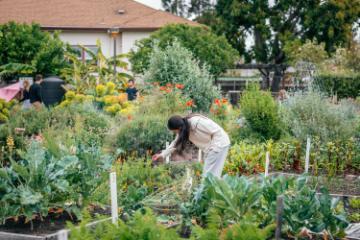
Welcome to the Center for Sustainability's Forge Garden! Whether you’re a longtime visitor or this is your first time exploring our on-campus oasis, we are excited to share 15 Things to Love About the Forge.
 Look for the the numbered signs at each tour stop.
This is a working garden, so please watch your step and tread lightly.
Begin your self-guided tour by entering the front gate.
15 Things to LOVE About the Forge Garden
As you arrive at each stop, click to expand the details.
1. Forge Origins
The Forge Garden is SCU’s half-acre edible, organic garden that serves as a hub for sustainable food system education.
Forging a Name In the summer of 2003, SCU’s Anthropology Department discovered the remains of the 19th century blacksmith shop on this spot. Forge Garden is literally built upon the site of a forge, but the name also represents the connections forged between campus, community, land, nourishment, and sustainable growth.
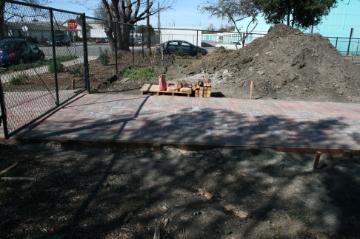
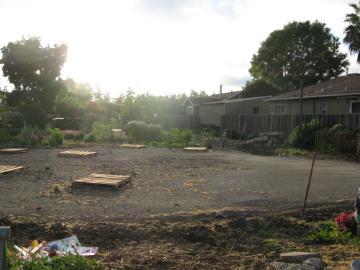
An Idea Grows This plot of land was being used as a construction staging site when the idea for an educational campus garden was first suggested.
Over 150 SCU students from 7 Environmental Studies classes contributed garden design ideas and drawings for the Forge. Between 2013 and 2015 the Forge Garden master plan was created and implementation began.
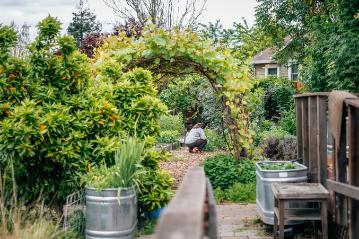
Forge Garden Programs aim to build a just and sustainable food system through education, collaboration, and connectivity, using the garden as a living lab for hands-on, interdisciplinary learning. ENVS 196, the Forge Garden Practicum course, was first taught in 2014.
15 years later, this once-empty lot is now a flourishing working garden. Today, the Forge Garden employs a full-time garden manager, as well as garden apprentices, interns, fellows, and campus and community volunteers.
🌱 Continue to Stop 2 - Walk to the left of the Solar House.
2. Solar House
The Solar House is more than the Forge Garden’s office, kitchen, gathering spot, and base of operations. It’s also an award-winning, student-designed, 100% carbon-neutral building that once stood on the National Mall in Washington DC.
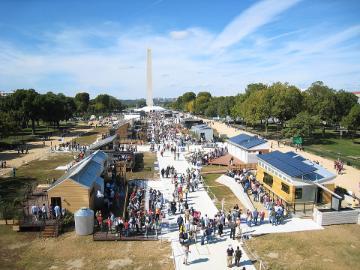
Originally called the Ripple House, it was SCU’s entry in the 2007 Solar Decathlon, a national competition that challenges college students to design efficient, affordable buildings powered by renewable energy. The house was awarded 3rd place, scoring a perfect 100 points in the Hot Water contest and the Energy Balance contest. It exemplified reuse with insulation made from recycled jeans, kitchen tiles made of recycled bottles, and a deck constructed from recycled plastics.
After making its way back to SCU, it was reassembled and displayed near Leavey. In 2012, the house was relocated to the garden to serve as the office and volunteer hub. Cheers ensued - this was the first time the garden has an onsite bathroom!
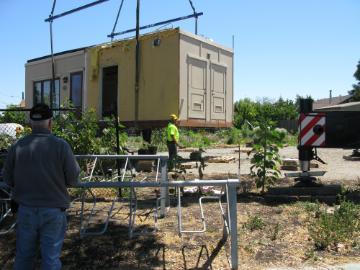
**This house almost didn't make it to D.C. for the Solar Decathlon when the team's transport truck broke an axle! Luckily it only delayed them by three days and they went on to win third place.
🌱 Continue to along the Solar House deck to Stop 3 - Grapevine Archway.
3. Grape Vine Archway
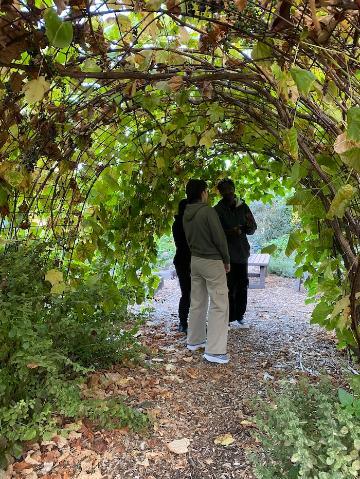
The Forge Garden packs so much within its half-acre. Small gardens save space by getting creative. This archway turns a walkway into vertical growing space for grapevines. And it adds a touch of whimsy as you move from one area to another.
🌱Continue through the archway to Stop 4 - Growing Beds
4. Numbered Growing Beds
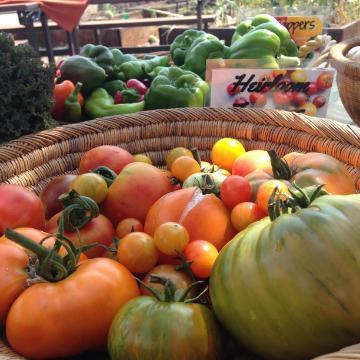
The Forge boasts over 15,000-square feet of garden beds. This is truly the heart of the garden, where our seasonal organic produce is grown.
Start Organic helped build 49 raised beds and hosted workshops for community members to learn bed construction.
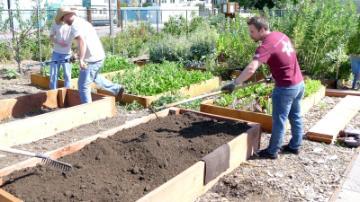
Produce is are grown year-round and is sold at out weekly farmstand on a donation-based sliding scale to students, staff and the local community. It is also donated to Bronco Pantry and supplies some SCU kitchens.
🌱Continue forward to Stop 5 - The Chicken Coop
5. Chicken Coop
Say hello to our beautiful hen ladies! Apple, Celine, Bridie, Bok Choy, Persimmon, and Crumbs.
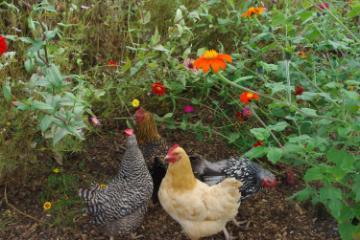
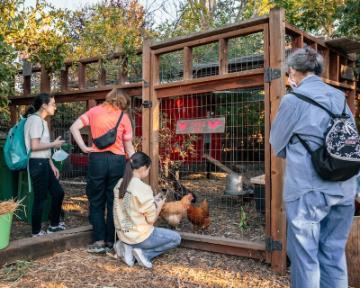
Their Bronco-red coop was originally designed as part of ENGR 110, then redesigned over the years by future classes to address technical issues and improve ease of cleaning, security, and comfort for our feathered friends. The light-sensored automatic door was designed by students in 2016 and safely secures the chickens inside each night. The eggs collected go to volunteers and staff.
🌱Turn left and continue to Stop 6 - Rainwater Catchment System
6. Rainwater Catchment System
Our rainwater catchment system is a perfect example of how Forge Garden provides project-based learning opportunities across the curriculum, giving a chance to explore broader ecological and social issues. As early as 2011, students in ENGR 110: Community Based Engineering Design have partnered with the Forge to design and prototype a variety of structural improvements.
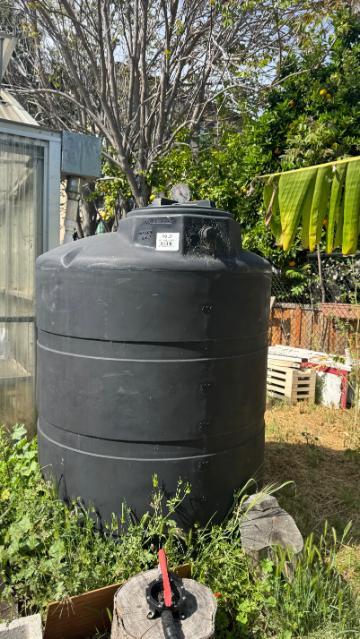
In Fall 2016, students created this system to capture rainwater and store the water for later use in the garden. It uses a tank and platform system to alter greenhouse gutters to divert water flow to the tank. Beyond honing their engineering design skills, this collaboration allowed students to address sustainable water usage in drought-prone California. From raindrops to nurturing the garden, from water scarcity to working solutions, Broncos are learning how their actions can make a lasting impact.
🌱Continue (or peek) behind the Greenhouse to Stop 7 - Bee Hives
7. Apiary - Bee Hives
Bees are VIPs in the garden - Very Important Pollinators! We added our apiary in 2020 so that our buzzy volunteers can help our garden thrive. Our bees are cared for by Phil Kreig at HiveMinded, who teaches 1-2 beekeeping workshops at the Forge every year.
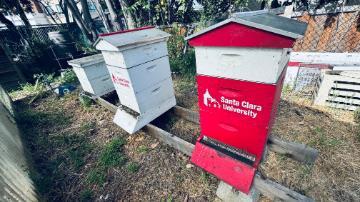
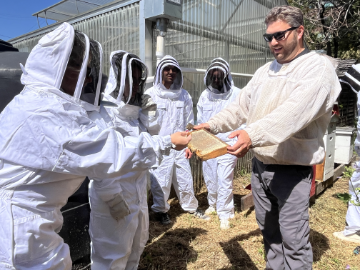
**Don't Bee Afraid! Bees rarely sting unless they feel threatened. Unlike wasps, bees dies after they sting, so they only do it as a last resort. Be kind to bees and they will be kind to you!
🌱 Continue to Stop 8 - The Greenhouse
8. Greenhouse
Step inside The Forge's 400-square-foot greenhouse. Built in 2011, the greenhouse allows our team to start seedlings for the garden and offer plant sales to the public. These popular spring and fall events offer a diverse selection of open-pollinated and certified organic hybrid annual vegetable starts, selected for Santa Clara's unique growing conditions.
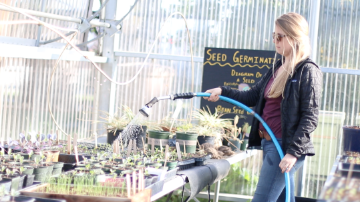

**Come back this Saturday, April 26th for our Spring Plant Sale from 11am to 1pm. We’ll have tomatoes, eggplants, cucumbers, peppers, squash, and basil. All donations go directly into our programming at the garden!
🌱 Continue to Stop 9 - Water Feature
9. Ohlone Native Plant Garden and Water Feature
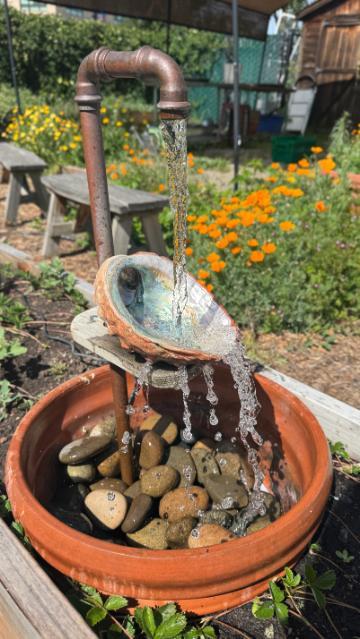
The Ohlone Native Plant Garden is a true cross-disciplinary collaboration. Spearheaded by faculty from Anthropology, English, and Theology, Ethics, and Spirituality as well as Ohlone Culture Bearers and Center for Sustainability, it was funded by grants from the Environmental Justice & Common Good Initiative and the Miller Center for Global Impact. Our solar-powered fountain was designed and built by a student group in ENGR 110, and with guidance from the Community Heritage Lab on campus and representatives from the Muwekma Ohlone Tribe. It adds the sound of running water and incorporates an abalone shell, both of which are significant in Muwekma Ohlone culture.
In the native plant garden, SCU students actively learn about indigenous relations with the earth in a number of ways. The TESP 150 - Sacred Nature course meets here weekly to observe and sketch native plants, and learn about the myriad ways that the Ohlone used them, including for food, medicine, repelling insects, cleaning, hunting, fishing, basketry, and rituals. They learn about, plant, tend, and harvest many foods that native North and South Americans developed and cultivated. They listen to sacred stories about these plants. They also maintain the native garden space as a service to the Ohlone people.
This vital garden space also hosts the Ohlone Youth Cultural Camp, where Ohlone teens learn about native plants and engage in ancestral practices using the garden's bounty. What began as a simple idea blossomed into a vibrant collaboration. This patch of earth was transformed into a collection of plants , then transformed into a living classroom that educates, nourishes, and connects us to our common home.
🌱Look at the trees along the fence for Stop 10 - The Orchard
10. The Orchard
In 2010 the first third of the orchard you see today was planted. Today you’ll find over 20 thriving fruit trees at the Forge, with ripe fruit picked for our weekly farm stand. Can you spot plums, peaches, figs, apples, persimmons, apricots, and bananas?
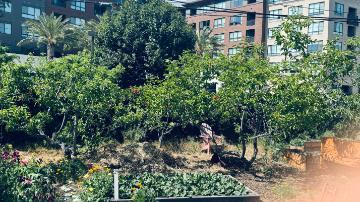
The Forge Gardens’s orchard offers a significant connection to Santa Clara Valley’s forgotten past, where the most famed farmland in the nation was buried by expansion. Though small, our orchard brings history alive, offering a taste of the bounty that once surrounded SCU.
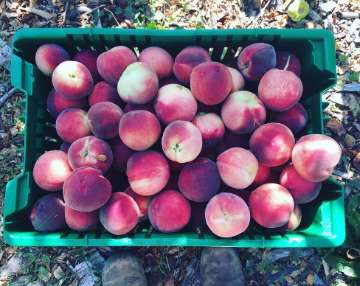
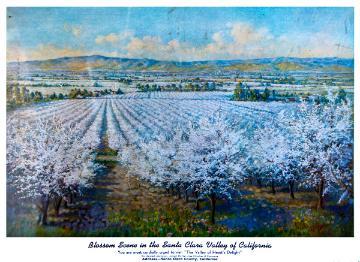
The Valley of Heart’s Delight
“Silicon Valley is probably good. The Valley of Heart’s Delight was a glory. We should have found ways of keeping one from destroying the other.” - Wallace Stegner, 1984
Whenever you are in Silicon Valley, the soil beneath the concrete holds a rich, fruitful past. Santa Clara Valley was known as The Valley of Heart’s Delight, with a sea of orchards and farms producing and preserving the majority of California’s stone fruits, sold across the nation and exported to the world. After WWII, an era of rapid growth saw suburban housing and commercial development expand over the flat, fertile land. By the early 1960s, farms and orchards began to disappear rapidly, until nearly every acre was replaced by neighborhoods and shopping centers that often bear their names. (Think about that when you pass places like the Pruneyard Shopping Center, Blossom Hill Road, or Cherry Orchard Apartments.)
🌱Continue along the path to Stop 11 - Vine-Covered Pergola
11. Vine-Covered Pergola
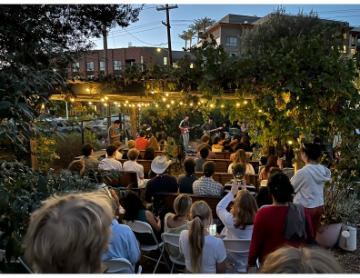
The pergola and tethered grape vines cover our outdoor classroom space that is also the focal point of many of our large outdoor events in the garden, such as our upcoming Sustainability Celebration. It’s also the spot for our popular semi-annual garden concerts hosted on by KSCU, the student radio station.
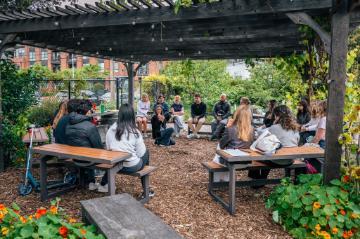
🌱Continue through the pergola and past the front gate to the back of Solar House for Stop 12 - Outdoor Kitchen
12. Outdoor Kitchen
Sharing a meal is one of the most meaningful ways to feed connection and community. When the Forge’s outdoor kitchen was added in the Spring of 2018 - the final piece of the original master plan - it created a space to host large group meals. Nourish Nights was launched in 2022 to address food insecurity on campus by offering a safe, welcoming, and nourishing community space. Students can enjoy a free plant-based meal cooked onsite by campus organizations and volunteers.
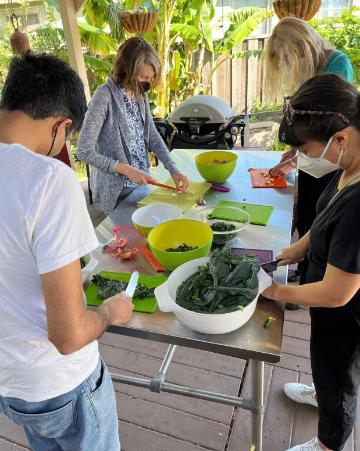

This covered outdoor deck also provides space to host programming around food preparation and plant-based nutrition, as well as a variety of sustainability workshops and our weekly farm stand.
Notice the cob pizza over in the corner of the patio - we'll talk about it more at Stop 14.
🌱Continue past the outdoor kitchen to Stop 13 - Composting System
13. Composting System
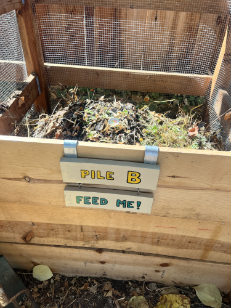
Composting has been part of the garden since it opened, but earlier this year we took a huge step forward with a redesigned composting system. With the support of student apprentices, volunteers, and SCU’s Facilities team, we now have 6 permanent wooden bins that allow us to compost directly in the garden.
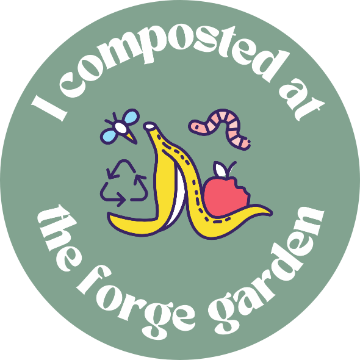
The Forge is now accepting food scrap donations from students, staff, and the public. Students from COMM 157: Environmental Communication designed a marketing campaign to raise awareness of the program, including designing an “I composted” sticker and developing a punch card that allows compost donors to earn a $10 voucher to use at our weekly farm stand!
🌱Turn around the side of the Solar House to Stop 14 - The Cob Bench
14. Cob Bench & Pizza Oven
Our cob bench and pizza oven were true labors of love. Cob, similar to adobe, is an inexpensive building material made with clay, sand, and straw, but is VERY labor intensive. Natural Building workshops were held in 2017 to construct the cob bench and pizza oven using natural building from materials found within 1 square block of the garden.
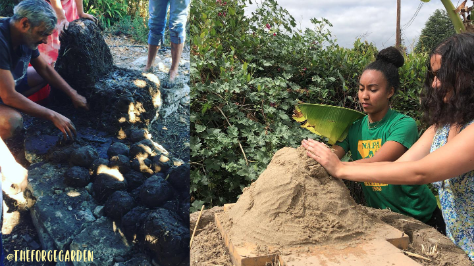
To make the bench, it took 15 garden volunteers two days, working about five hours each day, to mix the cob using their feet - like stomping grapes - then form it into shape by hand. A future workshop - and a lot more stomping - built the wood-burning pizza oven.
The Forge Garden provides so many ways to invite sustainability into student’s lives. Whether working with natural materials, creating gathering spaces, or cooking shared meals, this garden is truly a living classroom.
🌱Turn left and follow the path to the end of Solar House (near when the tour began) to Stop 15 - Milkweed
15. Milkweed
Look down to see the milkweed plants.
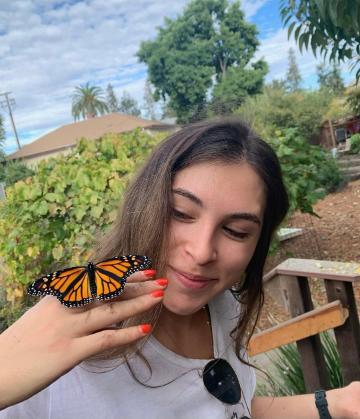
Not everything grown in this garden feeds people. The Forge’s native milkweed is a butterfly nursery! Monarch butterflies only lay eggs on milkweed, and hatching caterpillars only feed on milkweed leaves. Gently look to see if you can spot any black and yellow caterpillars.
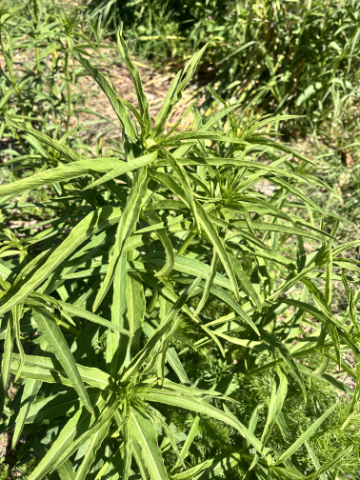
Western monarch populations have declined 90% in the past 40 years due to habitat loss, climate change, and pesticide use. Our milkweed not only attracts these orange-and-black beauties to the garden, but provides a place for the next generation of butterflies to hatch and grow.
This concludes the 15 Things to Love About the Forge Garden tour.
Please visit the garden again, and check our Sustainability event calendar for upcoming events and workshops.
Help The Forge Garden Continue to Grow!! Support the Forge Garden Gift Fund
Please support the Forge Garden by shopping at our farm stand, volunteering, or contributing to our Forge Garden Gift Fund, which directly funds garden programs and supports our student interns as they learn about local food systems and food justice.