Faculty Fellows
We are pleased to announce our 2025-2026 cohort of CAH Faculty Fellows.
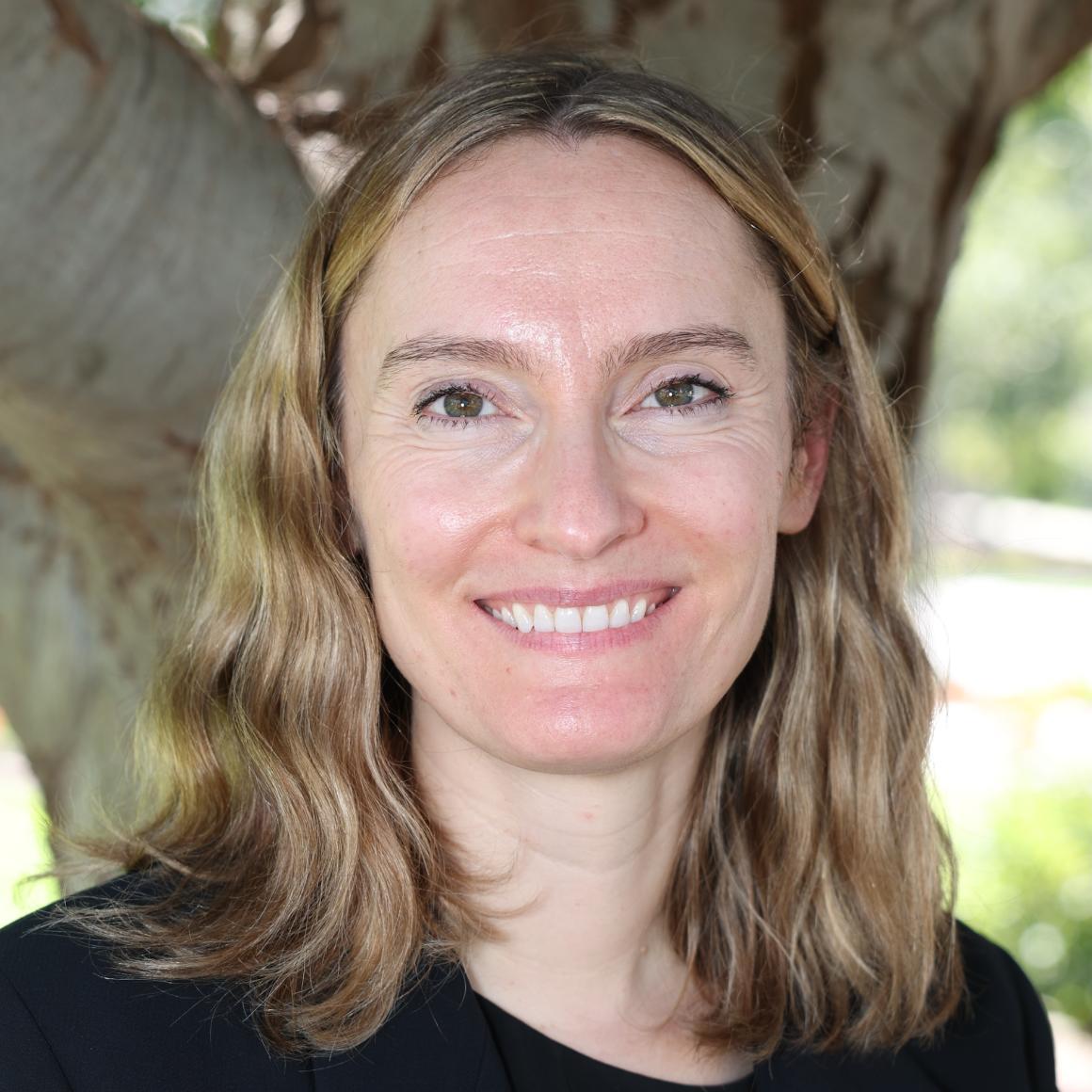
Jeannette Alden Estruth (History), “The Galactic Commons: Reimagining Interplanetary Commons from the Cold War to the Present”
The generosity of the Santa Clara University CAH Faculty Fellows Program will allow Estruth to complete her writing and workshopping of a current article-in-progress, “The Galactic Commons: Reimagining Interplanetary Commons from the Cold War to the Present” for publication.
In the early 2020s, The Washington Post, The Guardian, and Bloomberg News began defining the recent proliferation of privately-owned low-Earth-orbital spacecraft launches as inaugurating a “new space age.” During the summer of 2019, Amazon founder and multibillionaire Jeff Bezos had launched himself into suborbital space with his new space travel firm, Blue Origin. In 2019 and 2020, the U.S. Federal Government had established a sixth branch of the American military, the Space Force, and took over a long-standing joint air force base in Greenland from Denmark. By the early 2020s, academic reports issued by Perry World House at Penn, the Whiting School of Engineering at Hopkins, and the Harvard Business Review were all in agreement that the United States had entered a “new space age.” In April of 2023, MIT hosted a New Space Age Conference, and in April of 2024, McKinsey’s daily newsletter, “Chart of the Day,” dropped an article into thousands of inboxes entitled “Space: The Missing Element of Your Strategy.” The “new space,” it seemed, had arrived.
By contrast, the “old” Space Age was assumed to be located in the late 1950s and early 1960s, during the United States’ attempts to prove scientific, technological, and economic supremacy over the Soviet Union. Indeed, the primary explorers of space in the 1950s and 1960s were nation-states, not individuals, nor private corporations. So what changed? This article will trace the enclosure of outer space through American federal policy over the last eighty years. In doing so, it will argue not only that space was a galactic commons that became privatized by the American federal government and military in cooperation with private capital, but also that this process of enclosure became crucial to the current technology industry’s speculative intellectual and cultural project of imagining work without labor. The article will ask: Why is space a horizon of this imaginary? What are the stakes of this imagination? How did the enclosure of space help cheapen, obscure, and make invisible terrestrial labor? How does labor itself contest, negotiate, structure, and conflict with these processes? If the “new space” tech barons have made a grab for political power over the imagined future of outer space, what is the history of this grab? If technologies become sites of politics, how has space exploration been embedded in, and become constitutive of, social relations and state formation?
For many of today’s lawmakers and investors, commercial space ventures are the imagined future of space. The goal for emerging space travel firms is to make commercial flights common and affordable enough for residential space colonization to increase, and to open the possibility of mineral mining on the moon and Mars. They seek to open new frontiers for resource extraction, to expand surveillance and mapping of earth, and to provide viable habitation for a galactic elite. The dream is that a select group of people will emigrate from earth, and settle in the heavens: the envoys not of mankind, but as deserters of it.
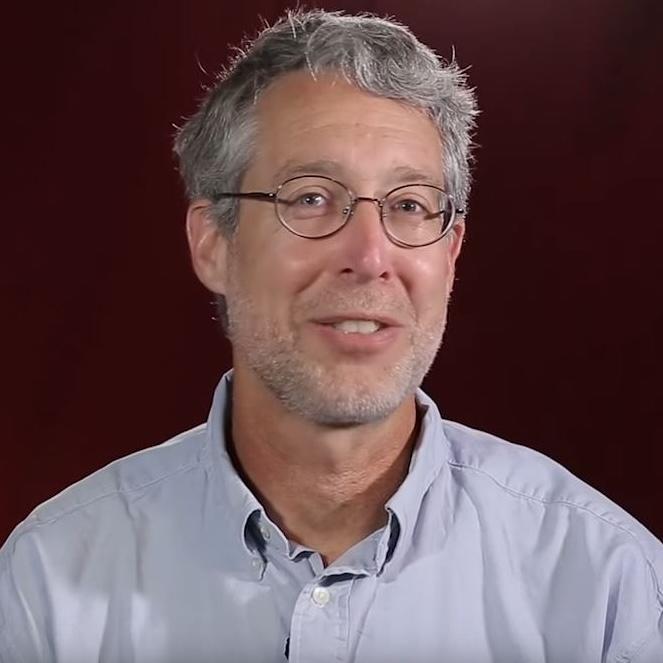
Michael Kevane (Economics), “Voices of Tomorrow: Science Fiction Stories by Students, for Readers in Ghana and Burkina Faso, Illustrated by Africa-Based Artists”
Prof. Kevane’s project “Voices of Tomorrow: Science Fiction Stories by Students, for Readers in Ghana and Burkina Faso, Illustrated by Africa-Based Artists” continues work he has been doing since 2001, supporting community libraries and reading through the non-profit organization Friends of African Village Libraries. Since a civil conflict has closed almost 20 community libraries in Burkina Faso, FAVL has in recent years produced and distributed more than 75,000 copies of 150 locally-authored and illustrated chapbooks. As a new initiative in that chapbook effort, Kevane hopes to foster more genre writing and reading. Working in collaboration with Prof. Kirk Glaser (SCU English), this project will pair Santa Clara University students with Africa-based illustrators to develop science-fiction themed chapbooks in the Afrofuturism style. The chapbooks will be produced and distributed to libraries and schools in Ghana and Burkina Faso. Click here (www.mkevane.com) to learn more about Prof. Kevane and his research Program.
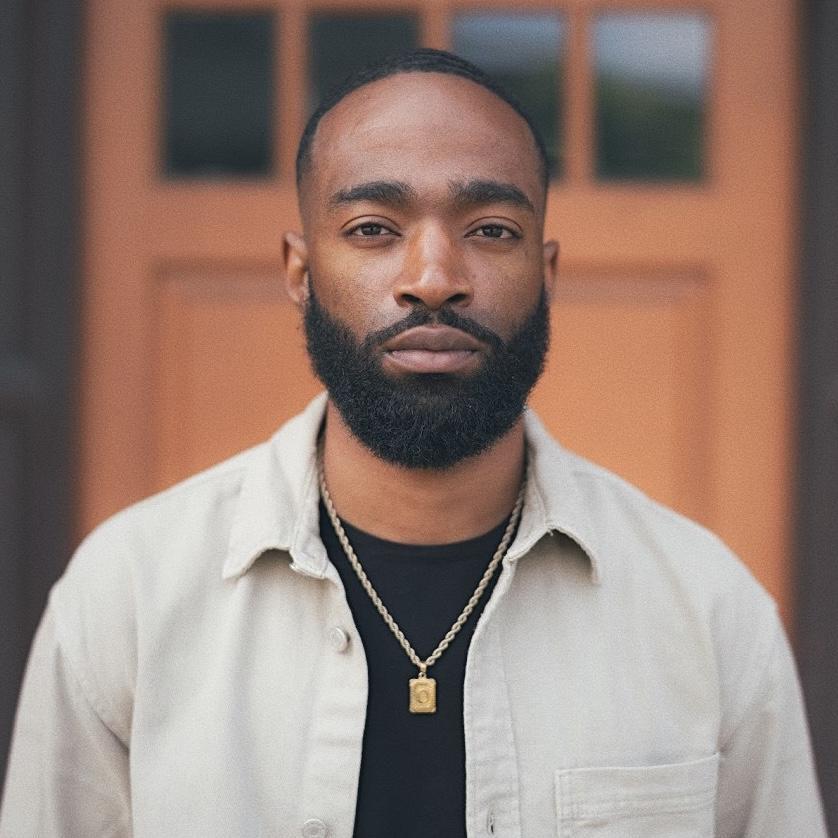
Daniel Summerhill (English), "Building a Language, Building a World"
"Building a Language, Building a World" is a multi-phase project that includes the curation of an anthology of abolitionist poets, a reading and panel discussion, as well as resources for those interested in transforming their understanding of harm, healing and justice. Poetry and social justice are inherently linked if we think of language as a tool for empathy, truth-telling and world building–all functions that literary giants such as June Jordan, Audre Lorde, James Baldwin, Langston Hughes and others understood as the enterprise of "writing." Their work on and off the page are testaments to that legacy. Speaking about his role as a “social poet,” Langston Hughes said, “the moon belongs to everybody.” In this way, we are all both admirers of the moon and also keepers of it. Hughes spoke of his early work as “social poems” because they were about people's problems – whole groups of people’s problems – rather than his own personal difficulties. Hughes’ statement echoes the importance of empathy and the human requirement to be understood and to understand. James Baldwin said he wrote to “bear witness to things that everybody knows but refuses to face.” I liken Baldwin’s discussion to echo the sentiment of poetry being the work of witness, truth telling and excavation. The Center for Arts and Humanities facet of this project will include a reading and talk by writers working at the intersection of prison abolition and poetry.
An exciting part of these projects is how they will engage with students, faculty, and community partners. Stay tuned for more details about these collaborations.
Past Faculty Fellows
2024 Fellows
2024-25 Faculty Fellows
Justin Clardy, Philosophy: "Civic Indifference and Black Suffering"
Heather Clydesdale, Art and Art History: “Building Public Character in Taiwan”
Jess Eastburn, Art and Art History: “Wayfinding”
Miah Jeffra, English: “Summer of the Locusts”
2023 Fellows
2023-24 Faculty Fellows
Jimia Boutouba, Modern Languages and Literatures: “ War, Race and Sexual Politics in French Indochina”
Hsin-I Cheng, Communication: “ Bridging the Digital and Physical Spaces: Furthering Black and Asian Solidarity”
Elizabeth Drescher, Religious Studies: “Seeing Spirits of Silicon Valley in Place: Mural Art as Memory, Identity, Resistance, Solidarity, and Transformation in San José, CA”
Christina Zanfagna, Music: “Black-Italian Crossroads: Racial Tensions, Social Solidarities, and Sonic Affinities”
2022 Fellows
2022-23 Faculty Fellows
Sonia Gomez, History: "A Gendered Diaspora: Intimacy and Empire in the Making of Japanese America, 1908-1952"
Tony Hazard, Ethnic Studies: "Afro-Indigeneity, Family Remembrance, and The Narragansett of Rhode Island"
Amy Lueck, English: "Indigenous Remembrance of the Winchester Mystery House"
Lee Panich, Anthropology: "Insurgent California: Native Resistance and the Collapse of the Missions"
Mukta Sharangpani, Women's and Gender Studies: "Aging Across Borders: Towards an Ethnography of Loss and Hope"
2021 Fellows
2021-22 Faculty Fellows
Chris Bacon, Environmental Studies and Sciences: “Framing Food Justice: Diverse Perspectives towards Building Back Post-COVID Food Systems with Equity and Resilience.”
Sonia Gomez, History: “A Gendered Diaspora: Intimacy and Empire in the Making of Japanese America, 1908-1952.”
Maggie Levantovskaya, English: “Writing Illness and Disability.”
Juan Velasco, English: “A Film Treatment/Screenplay Based on Salaria Kea’s Biography.”
2020 Fellows
2020-21 Faculty Fellows
The Center for the Arts and Humanities announces its 2020 Faculty Fellows. This year the Center has encouraged Fellows to explore how they might collaborate on similarly themed projects. More information on those projects and how they will eventually be shared with the compus and community will be forthcoming as circumstances permit. The Fellows will also be working with Student Fellows to be named later.
Michelle Mueller, Religious Studies: Adam the Father, Eve the Mother: The Adam-God Doctrine & 'Heavenly Parents' in Mormonism
Robin Tremblay-McGaw, English (in collaboration with Megan Nicely, Performing Arts, University of San Francisco): The Art of Reflection, Resistance, and Dissensus
Ryan Carrington, Art and Art History: Contradictions-Solo Exhibition at the San Jose Museum of Quilts and Textiles, 11/28/20-1/10/21
Roya Ebtehaj, Art and Art History: In-between
Allia Ida Griffin, Ethnic Studies: The Afterlife of Loss: On Writing from the Iranian Diaspora
Danielle Morgan, English: 'A Bogeyman's Family': The Black Uncanny in the 21st century
Tricia Creason-Valencia and Emily Reese, Communication: A Short Film: ¡Aguas!
2019 Fellows
2019-20 Faculty Fellows
Renee Billingslea, Art and Art History: Ten Japanese Concentration Camps.
Katharine Heintz, Communication: Saint Clare School media project
Jackie Hendricks, English, Theresa Conefrey, English, Maura Tarnoff, English,: A Humanities Annotation App
Mathew Kroot: Anthropology, Treasures of the Old Quad: Tangible and intangible heritage in a Santa Clara neighborhood
Kristin Kusanovich, Theater and Dance and Child Studies: Sustainability and Environmental Justice project
Roberto Mata, Religious Studies: Latinx Religious Art & The Degentrification of Aesthetics in San Jose
Danielle Morgan, English: Frank Sinatra Fellow
Nico Opper, Communication and Sonja Mackenzie, Public Health, Gender Justice.
David Popalisky Theater and Dance: Water
Enrique Pulmar, Sociology
Julia A. Scott, Neuroscience: Controlling your reality: Transforming ancient meditative practices into a virtual reality experience
2018 Fellows
2018 Frank Sinatra Faculty Fellow
Danielle Morgan, Assistant Professor of English
Danielle Morgan specializes in African American literature in the twentieth and twenty-first century. She is particularly interested in the ways that literature, popular culture, and humor shape identity formation. Her writing has been published on Racialicious, in Post-Soul Satire: Black Identity after Civil Rights, Humanities, and is forthcoming in Afterlife in the African Diaspora and Biography: An Interdisciplinary Quarterly. She has recently completed a manuscript entitled Just Kidding: African American Satire, Selfhood, and the 21st Century.
2018 Faculty Fellows
Renee Billingslea, Lecturer, Art and Art History Department
Project: Ten Japanese Internment Camps
This project will create a “comprehensive picture of this part of American and California history, bringing together imagery of the campsites today, historical imagery, and stories of the people who were imprisoned in each camp, demonstrating the depth and magnitude of Order 9066.
Renee Billingslea received her MFA in Photography from San Jose State University and teaches in the Department of Art and Art History at Santa Clara University. Her Nationally known installation, The Fabric of Race: Racial Violence and Lynching was recently on exhibit at the Rosa Parks Museum in Montgomery, Alabama. Currently, Billingslea is creating a photographic installation, entitled Ten Internment Camps that address the unjust incarceration of Japanese Citizen living in the United States during WWII. The installation will include her imagery of each of the ten Interment Camp sites, as well as historical photographs helping to tell a complete story of this part of American history, and its impact on racism and immigration issues today.
Blake de Maria, Harold and Edythe Toso Professor, Art and Art History Department
Project: The Built Environment: Architectural History in the Digital Age
Utilizing her training as an architectural historian, Blake de Maria plans to develop a technology-based course and digital exhibition entitled "The Built Environment: Architectural History in the Digital Age." The course will focus on the historical development of three categories of public spaces – educational, commercial, and industrial – with a specific emphasis on structures on the Santa Clara campus and in Silicon Valley. Students will create a digital exhibition showcasing architectural developments on campus as well as those built at neighboring institutions, including Apple, Google, and Adobe. The exhibition will be accompanied by a GuidiGo app that will offer additional information concerning the exhibition, as well as materials concerning spaces of architectural interest in Silicon Valley.
Dr. de Maria received her undergraduate degree from UCLA, where she specialized in Islamic Art, and then attended Princeton University where she continued her focus on the early modern Mediterranean. Her publications include the books, Becoming Venetian: Immigrants and the Arts in Early Modern Venice (Yale 2010) and Reflections on Renaissance Venice: Essays in Honor of Patricia Fortini Brown - which was awarded the Gladys Krieble Delmas Award by the Renaissance Society of America as well as essays on The Oracles of Leo the Wise and the material culture of dining in early modern Venice. She is currently completing the manuscript, "Facets of Splendour: Gemstones and Jewellery in the Republic of Venice." In this study, she explores the mining, trade, and use of precious stones in a variety of venues, including the Treasury of San Marco in Venice.
Angela Holzmeister, Lecturer, Classics Department
Project: Interdisciplinary Conversations on Ancient Art in the Modern World
This project involves conversations between academics and local museum curators, disseminated via podcasts. The goal is to explore “the ethics of finding and acquiring objects, the presentation of artifacts, and the history of collections, as well as issues of identity, nationalism, and repatriation”.
Angela Holzmeister is Lecturer in the Classics Department, where she teaches Ancient Greek and Latin at all levels, as well as courses on mythology, friendship, and ethics. Her research focuses on Greek Imperial literature. She is also co-organizer of the upcoming SCU event "The Ethics of Collecting Art" (May 11, 2018), which is supported through a Hackworth Grant.
2017 Fellows
2017 Faculty Fellows
- Elizabeth Drescher, Religious Studies: Living Religions Collaborative Multimedia Website Development
- Teresia Hinga, Religious Studies: Religion and The Arts in (global) Silicon Valley: Building Resilience and Hope Through (Sacred) Song, Dance and Story Among (The African) Diaspora(s)
- Kristin Kusanovich, Theater and Dance: Art and Democracy
- Amy Lueck, English: Extending Digital Archival Research on our Campus
- Takeshi Moro, Art and Art History: Digital Storytelling through Virtual Reality Video Art